Friday, May 8, 2015

Fashion in "Imitation of Life" (1959)

source

Imitation of Life (1959) was a remake of the 1934 film of the same name starring Claudette Colbert. In this version, starring Lana Turner as Lora Meredith, it gets a glamorous update. The film, while still true to the original story, and certainly worth watching for that (make sure you have lots of Kleenex), it is also a fashion showcase where Lana gets to model 34 ensembles, designed by Jean Louis. Her jewels in the film were worth $1 million with the gowns costing an estimated $78,000, or around $2,218 each.


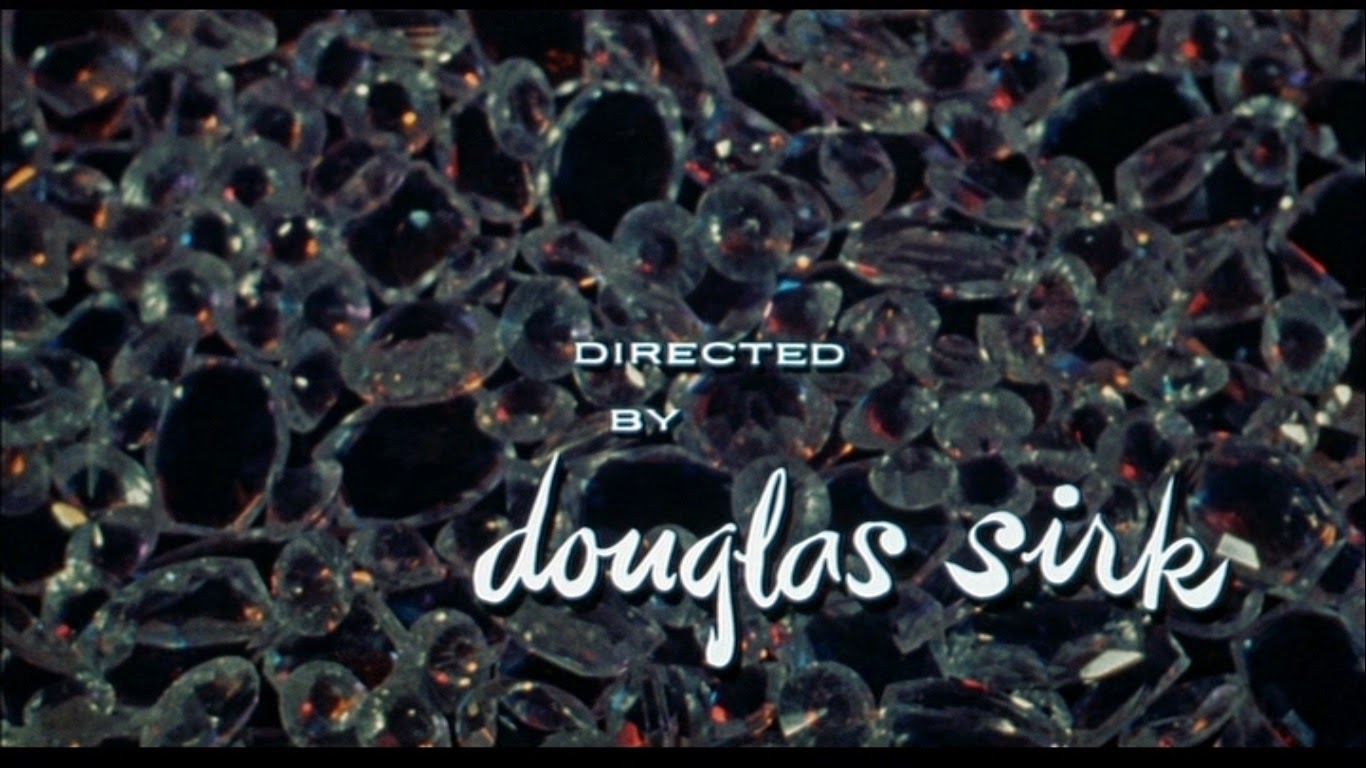
The film was directed by Douglas Sirk and was his last film. It also stars John Gavin as Steve Archer, Sandra Dee as Lora's daughter, Susan Kohner as the troubled Sarah Jane, and Juanita Moore as Annie Johnson.

Click here for a great write-up of the film as well as more pictures. All of the following screenshots were taken by me. Feel free to use them if you ever want to write a post on this film.


Not a great screenshot, but it shows her whole outfit 


Gingham dress, white belt 


Lora: You're aiming high.
Steve: Why not? It doesn't cost anymore.

Mother in Distress 


Look at that bling!

The dress matches her eyes 

A look at the back of the dress 


Probably my favorite outfit of Turners


That's John Gavin's real-life wife, Cicely Evans, next to him.
This is the only film she appeared in (uncredited)


A falling star


LOVE Sandra Dee's dress here!


Turquoise and coral


Let's take another look at John Gavin, shall we?


My camera could easily have a love affair with you.
Touché.

In case you were wondering, Gavin is 6'4" and Turner was 5'3" (my height!
Now why don't I have a figure like hers...)
 
They like to film Gavin from this angle, instead of showing his beautiful face.


Thursday, May 7, 2015

Reviewing "Mom in the Movies"

For Mother's Day, I decided to review a book I read recently titled Mom in the Movies: The Iconic Screen Mothers You Love (And a Few You Love to Hate) © 2014 by Richard Corliss and TCM.


Table of Contents
 
Forward by Debbie Reynolds and Carrie Fisher
 
Introduction
 
A Gallery of Golden Age Moms
Motherhood in the Movies by Sam Robards
 
Silent Moms
 
The Mother Martyrs of Pre-Code
 
The Great American Mom
On Jane Darwell in The Grapes of Wrath by Eva Marie Saint
 
Serial Moms
 
Perennial Moms
On Movie Motherhood by Jane Powell
 
Aunts
 
Mammies and Nannies
 
A Mom by Any Other Name
 
When Moms Collide with Their Kids
 
Bad Seeds
 
Malevolent Moms
 
Crime and Horror Moms
On Being a Mother and Actress by Tippi Hedren
 
Sci-Fi Moms
 
Showbiz Moms
The Greatest Mama of Them All by Illeana Douglas
 
A Gallery of Modern Moms
 
Semper Mom!
 
The Introduction asks the question, Where have all the mothers gone? Here are the reasons they suggest:
 
1. Movies are about movement - people want to see action when they go to the movies.
 
2. The role of women has evolved - women are no longer stay-at-home moms.
 
3. The audience has evolved - moviegoing is no longer mainly a family activity, rather, guys go see guy movies and girls go see girl movies and couples see a mix of both.
 
The Gallery of Golden Age Moms focus's on the actress's who "played women who were "heart strong and hearth warm." It looks at the mother roles of Fay Bainter in Mother Carey's Chickens (1938) and White Banners (1938); Beulah Bondi in Remember the Night (1940), Of Human Hearts (1938), and of course It's a Wonderful Life (1946); Anne Revere in Body and Soul (1947), National Velvet (1944) and Gentleman's Agreement (1947); Myrna Loy in The Best Years of Our Lives (1946), Mr. Blandings Builds His Dream House (1948), The Red Pony (1949), and Cheaper by the Dozen (1950); and Irene Dunne in Cimarron (1931), Penny Serenade (19__), and The White Cliffs of Dover (1944).
 
Silent Moms looks at the mother roles of silent stars Mary Pickford, Lillian Gish, and Anna May Wong, among others.
 
The Mother Martyrs of Pre-Code focuses on 4 "weepies": The Sin of Madelon Claudet (1931) starring Helen Hayes - a role which won her an Academy Award, Sarah and Son (1930) starring Ruth Chatterton, The Most Precious Thing in Life (1934) starring Jean Arthur, and Madame Butterfly (1932) starring Sylvia Sidney. All are about mothers who have sacrificed their personal happiness for that of their child in order that they might have a better life than what they could offer.

The Great American Mom - moms as "warm and nourishing as apple pie," honors moms who held their families together through thick and thin, good times and bad: Jane Darwell in The Grapes of Wrath (1940), Claudette Colbert on the Home Front in WWII in Since You Went Away (1944), Greer Garson protecting her family on the British Front in Mrs. Miniver (1942), Mary Astor at the Turn-of-the-Century in Meet Me in St. Louis (1944), underappreciated Dorothy McGuire in A Tree Grows in Brooklyn (1945), and the saintly Irene Dunne in I Remember Mama (1948).

Serial Moms looks at the wife-mother roles in family-friendly film series: Fay Holden in The Hardy Family, Marjorie Main in Ma and Pa Kettle, Spring Byington in The Jones Family, the Gleasons in The Higgins Family, and Penny Singleton in Blondie (based on the comic strip).

Perennial Moms are those "mother stories retold across the decades." These include the stories of Madame X (1929 & 1937), Stella Dallas (1925, 1937, 1990), Anna Karenina (1927 as Love, 1935, 1948, and 2012), and Imitation of Life (1934, 1959 & 1948 as Little Black Angels).

Aunts are those who sometimes take the place of moms, including Auntie Mame in Auntie Mame (1958), Aunt Alicia in Gigi (1958), Aunt Polly in Pollyanna (1960), Aunt Polly in Tom Sawyer (1938), and Auntie Em in The Wizard of Oz (1939).

Mammies and Nannies have to be content with "pouring their love or pain into other people's children. The most famous of these is Hattie McDaniel's role as Mammy in Gone With the Wind (1939), for which she won an Academy Award. Others include Ethel Waters in The Member of the Wedding (1952), Taraji P. Henson in The Curious Case of Benjamin Button (2008), and Cicely Tyson in The Help (2011).

A Mom By Any Other Name looks at three kinds of "moms." Mothers of Lost Children looks at Greer Garson in Blossoms in the Dust (1941), Lillian Gish in The Night of the Hunter (1955), and Angelina Jolie in Changeling (2008). Stepmothers include Julie Andrews in The Sound of Music (1965), Julia Roberts in Stepmom (1998), and Natalie Portman and Lisa Kudrow in The Other Woman (2011). Surrogate Moms covers Ginger Rogers in Bachelor Mother (1939), Deborah Kerr in The King and I (1956), Diane West in Edward Scissorhands (1990), and Sandra Bullock in The Blind Side (2009).

When Moms Collide With Their Kids is an all too familiar topic. It looks at Claudia McNeil in A Raisin in the Sun (1961), Esther Minciotti in Marty (1955), Bette Davis in The Catered Affair (1956), Debbie Reynolds in Mother (1996), Barbara Harris in Freaky Friday (1976) and Jamie Lee Curtis in the 2003 remake, and Shelley Winters in Lolita (1962).

Bad Seeds try to answer the question, "what's a mother to do when she senses something is terribly wrong in the child she loves?" These mothers include Dolores Costello in The Magnificent Ambersons (1942), Joan Crawford in Mildred Pierce (1945), Nancy Kelly in The Bad Seed (1956), Beulah Bondi in Make Way for Tomorrow (1937), and finally Tokyo Story (1953).

Malevolent Moms focus's on what happens when the mother has something "terribly wrong." This includes Gladys Cooper in Now, Voyager (1942) who drives her daughter, played by Bette Davis, to a sanatorium. Laura Hope Crews runs her sons' marriage (Joel McCrea and Irene Dunne) in The Silver Cord (1933). Angela Lansbury turns her son into an assassin in The Manchurian Candidate (1962).

Crime and Horror Moms includes, to name a few, Margaret Wycherly in White Heat (1949), Leopoldine Konstantin in Hitchcock's Notorious (1946) and Mrs. Bates of his Psycho (1960).

Overall this was an interesting and easy book to read. I skipped parts that I wasn't really interested in (movies made from the 70s to the present).

Wednesday, May 6, 2015

Romantic Comedy Month

Well, Romantic Comedy Month has arrived. Before I begin, I want to define what a Romantic Comedy is (as opposed to a Screwball Comedy) and give you the order of films I will be covering. This month I also have several posts leading up to Mother's Day as well as two posts for the Great Katharine Hepburn Blogathon (as well as a couple I was supposed to post last week).


The Blonde at the Film, in her recent post on Bringing Up Baby (1938) describes the Screwball genre perfectly:
After It Happened One Night (1934), which is generally considered to be the first screwball, the genre flourished throughout the 1930s and into the early 1940s. The elements that make up screwball include farcical situations, witty, quick repartee, slapstick, mistaken or fluid identities, secrets, mismatches in social class, journeys away from civilization and into the country, a battle of the sexes romance plot where the madcap woman pursues the man and sometimes “liberates him” with her wackiness, and a topsy-turvy world where normal reality doesn’t apply.
Example: Carole Lombard & Fred MacMurray

Now, according to that definition, It Happened One Night doesn't sound as much of a Screwball film as many of the later screwball films that were made. Here is another definition from an article on Preston Sturges:
...an archetypal screwball comedy, a genre that flourished in Hollywood from 1934 to 1944, derived its energy from setting oppositions (male-female, rich‑poor, fast-slow, honest-crooked, innocent-experienced, and many more) into conflict.
Several of these can be applied to It Happened One Night. So as you can see, the definition has several facets. This post over at The Vintage Cameo describes the film in terms of a Romantic Comedy.

This is the definition of a Romantic Comedy (past and present) according to Wikipedia:
... films with light-hearted, humorous plotlines, centered on romantic ideals such as that true love is able to surmount most obstacles. One dictionary definition is "a funny movie, play, or television program about a love story that ends happily." Another definition states that its "primary distinguishing feature is a love plot in which two sympathetic and well-matched lovers are united or reconciled." Romantic comedy films are a certain genre of comedy films as well as of romance films, and may also have elements of screwball comedies.  
In a typical romantic comedy the two lovers tend to be young, likeable, and apparently meant for each other, yet they are kept apart by some complicating circumstance (e.g., class differences, parental interference; a previous girlfriend or boyfriend) until, surmounting all obstacles, they are finally wed. A wedding-bells, fairy-tale-style happy ending is practically mandatory.
William Powell & Myrna Loy

Now that we have defined what a Romantic Comedy is, here is the line-up for the month:

1930s*:
1940s:
  • Third Finger, Left Hand (1940) - Myrna Loy & Melvyn Douglas
  • The Bride Came C.O.D. (1941) - James Cagney & Bette Davis
  • The More the Merrier (1943) - Jean Arthur, Charles Coburn, Joel McCrea
1950s & 60s:
  • Confidentially Connie (1953) - Janet Leigh & Van Johnson
  • Sunday in New York (1963) - Jane Fonda & Rod Taylor
  • Sex and the Single Girl (1964) - Tony Curtis, Natalie Wood, Lauren, Bacall, & Henry Fonda
Jane Fonda & Rod Taylor

*Romantic Comedy Month will begin right after the Great Katharine Hepburn Blogathon (May 9-12) and end in mid June.  There will be no Netflix Movie Mondays during this time.

Monday, May 4, 2015

Happy Birthday Audrey Hepburn!

 
Hello? Oh, thank you so much for remembering my birthday, Gregory! What are my plans for the day? Well, I was reading a book when you called.
 
 
Yes, fairy tales actually!
 
 
Then I was going to change to a chic playsuit and
bake a cake for tonight's party.
 
 
I do hope you can make it!
 
All images found via Pinterest

Sunday, May 3, 2015

Larceny Inc. (1942)

I unknowingly watched a movie on Tuesday, April 21, with Anthony Quinn in it on the anniversary of his 100th birthday! The film was Larceny Inc. (1942), starring Edward G. Robinson, Jane Wyman, Jack Carson, and a young Jackie Gleason!!


It's about an ex-con who, after getting out of prison decides to rob a bank. He buys a luggage store next door to the bank and has his henchmen start to dig a hole in the basement. Wyman, who wants Robinson to go straight, advertises sales for his store so that his business booms. With the money rolling in, Robinson decides that maybe earning money honestly isn't so bad after all. He decides to go straight for real this time. Unfortunately, his old pal Quinn gets wind of his old plan and breaks out of jail to get in on the deal. There's nothing Robinson can do but follow Quinn's orders.

Playing baseball for the prison team

"Weepy"
 
Mademoiselle Gloria (owns a lingerie store): Well I wish you'd drop in and look over my lingerie sometime.  
J. Chalmers 'Pressure' Maxwell (Robinson): Well, you drop in sometime and look over my trunks.

Quinn means business

Never thought you'd see Robinson dressed as Santa did you?
 
Well, you just did.

It was fun seeing Jackie Gleason. I didn't recognize him at first! You can see the start of the famous Jackie Gleason facial expressions. It just looks like he's trying to imitate Ralph Kramden and failing though.


This film wasn't as good as The Whole Town's Talking that I posted about last Sunday, but it was still enjoyable to watch.

Read Caftan Woman's post on Larceny Inc.

This film airs on TCM on Sept. 18th at 10:15am EST.

All images found via Pinterest