1. What was the first Hitchcock film you ever watched? I don't remember but it was probably Rear Window that I watched first in one sitting.
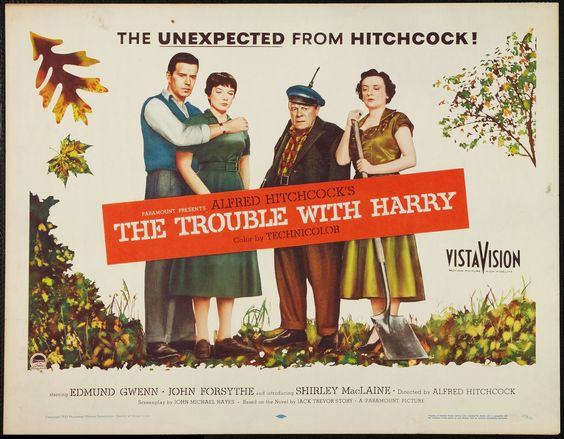
2. What’s your favorite Hitchcock film? There's several that are up there: Rebecca, Mr. and Mrs. Smith, Shadow of a Doubt, Notorious and The Trouble with Harry but it was Strangers on a Train that started my interest in Hitchcock. I had only seen his more famous films before (Rear Window, To Catch a Thief, Vertigo, North By Northwest) none of which I particularly like. Psycho and The Birds are favorites too but not really ones I would want to watch a lot.
3. What’s your least favorite Hitchcock film? Vertigo. I've never been a huge fan of James Stewart, though I like several of his movies, and I don't really like Kim Novak.
4. What’s your favorite Hitchcock cameo? Either Lifeboat or Strangers on a Train.
All of Hitchcock's cameos
5. Who’s your favorite Hitchcock villain? Joseph Cotten in Shadow of a Doubt.
6. Hero? Rod Taylor in The Birds.
7. Heroine? Ingrid Bergman in Notorious.
8. What’s your favorite Hitchcock quote? Edmund Gwenn in The Trouble with Harry [after Dr. Greenbow trips over the body]: Couldn't have had more people here if I'd sold tickets.
9. And, finally, how many Hitchcock films have you watched? 21
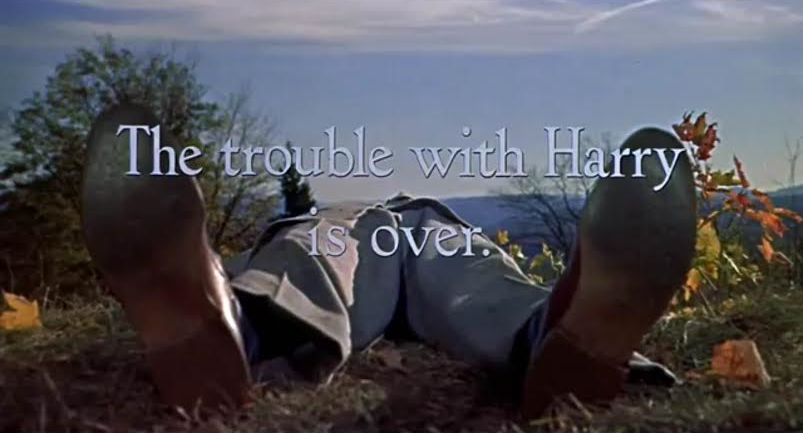
After wanting to watch The Trouble with Harry (1955) for quite some time, I was finally able to get my hands on a copy last month. It did not disappoint.
This isn't your typical Hitchcock film, and the viewer shouldn't go into it expecting one. Just watch the trailer and you will see what I mean.
That being said, here are five reasons you should watch The Trouble with Harry:
1. It's Hitchcock's only comedy. Yes, he also directed Mr. and Mrs. Smith (1941) but that was at the request of Carole Lombard and doesn't really have his "stamp" on it. Hitch's droll humor is unmistakable in this one.
2. Edmund Gwenn and Mildred Natwick. They are the REAL leading couple of the film. Without them, it would not be the delightful and unique film that it is! And who said falling in love over a corpse is only for young people?
3. Shirley MacLaine. It's her film debut and she nails it. It's not easy to play in a black comedy but her performance feels like that of a veteran.
4. Little Jerry Mathers of Leave it to Beaver fame. Only 6 years old, Mathers sprouts some of the most memorable lines and because he's so little they are all the more humorous.
This is a two-muffin rabbit.
5. The scenery. The fact that it was filmed in Vermont during a glorious autumn is more than enough reason to watch this movie. Okay, so some of the scenes ended up being shot in California with fall colored leaved glued on the trees, I couldn't tell the difference!
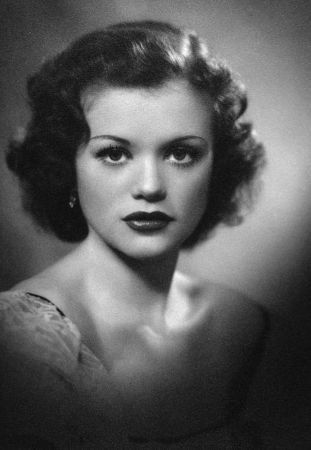
This post has been two years in coming. I first discovered Simone Simon shortly after creating this blog. The film was Cat People (1942) and there was so much I wanted to say about the movie and her performance in it but couldn't find the perfect words to describe it. The post would have just been me gushing about her accompanied by at least 30 photos of her adorable and bewitching face.
When the Classic Movie History Project Blogathon was announced with a category for foreign stars, I decided it was the perfect opportunity to learn more about this little known star that captured my attention so quickly.
Simone Simon was born in France on April 23, 1910 of a French father and an Italian mother. Raised in Marseilles and Madagascar, she moved to Paris when she was 19 and worked as a model, cabaret dancer, and briefly a fashion designer. She got her start in motion pictures there in 1931 when she appeared as a singer in the film Le Chanteur Inconnu. Then, in 1934, she appeared as a " a mysterious child of nature called Puck, who entrances Jean-Pierre Aumont, the swimming instructor at a mountain lake resort," in the film Lac Aux Dames. She was noticed by 20th Century Fox and made her English film debut in Girls' Dormitory (1936). Over the next two years, she made four more films: Ladies in Love with Janet Gaynor, Loretta Young, and Constance Bennett (it can be viewed on TCM on the 12th), Seventh Heaven (1937) with James Stewart - a remake of a Gaynor film, Love and Hisses (1937), and Josette (1938) with Don Ameche.
Tired of the silly fluff she was being given, and her low salary, Simon returned to France and 10 days later started filming on La Bête Humaine (1938). The producers had a different actress in mind for the role of femme fatale Severine, but the director, Jean Renoir, insisted on Simon.
I claimed, and still claim, that vamps have to be played by women with innocent faces. Women with innocent faces are the most dangerous ones! Also, you don't expect it, so there is an element of surprise! I insisted we use Simone Simon, which we did, and I don't think we were sorry.
Simon made one other film in France and then, because of the war, returned to Hollywood, this time to RKO, where she appeared in The Devil and Daniel Webster (1941) - also known as All That Money Can Buy.
Her next film paired her with the master of shadows, Val Lewton, in the cult classic Cat People (1942). Simon plays Irena, a fashion sketch artist who believes that the people of her Serbian ancestors village have a curse on them that if aroused sexually they will turn into a panther. This tale doesn't stop the handsome Oliver Reed (Kent Smith) from marrying her. He understands she is fearful of intimacy and lets her take her time before consummating their marriage. When she can't seem to get past her superstition, he enlists the aid of a psychiatrist, Dr. Louis Judd (Tom Conway). He also spends more and more time at the office with his pretty co-worker, Alice Moore (Jane Randolph). As time goes on, Irena becomes jealous of Alice and Dr. Judd tries to make a pass at his pretty patient.
With it's spectacular use of shadows and sounds to arouse terror in its audience, rather than showing that which is terrifying, the film remains Simon's best known film. Just watch this pool scene with actress Jane Randolph. It's terrifying without actually showing anything:
Here is what I wrote the day I watched it for the first time (8/12/14):
I just watched Cat People (1942) starring Simone Simon and its sequel, Curse of the Cat People (1944). First off, I really liked the first one. It was unusual and different from what I normally watch. I saw this movie listed in a film history book and its description intrigued me so I watched the trailers, which looked interesting, and then checked the film out from my library.
I think Simone Simon is so cute! I love her hair in the movie and she really does have a "cat" face. Not an evil cat but a cute cat. I liked her accent too.
Some screenshots and a gif:
This is NOT a look you want to see...
Trivia:
Because of the small budget (only $150,000), sets from Orson Welles' The Magnificent Ambersons were used.
The entire film was shot in 18 days. The crew worked in shifts around the clock.
Was Lewton's directorial debut. He went on to make several more successful low-budget horror films for RKO.
It is included among the "1001 Movies You Must See Before You Die" list.
Based on the success of the film, a sequel titled Curse of the Cat People (1944) was made. It focused on the friendship of Oliver and Alice's daughter with the ghost of Irena. The title is misleading, as it's really just about a lonely little girl.
Even with the success of Cat People, Simon never achieved critical acclaim in Hollywood. She made three other films at RKO - Tahiti Honey (1943), Johnny Doesn't Live Here Anymore (1944), and Mademoiselle Fifi (1944) - before returning to Europe. She appeared in only ten more films, taking a break from 1956 to 1973, when she made one more film. After that she disappeared from the public eye, refusing to give any interviews as she was now a "very old woman" and didn't want to appear on camera.
Her personal life is clouded in mystery and myths. Her maid, who was caught stealing from Simon, spread around an untrue story that she gave men to whom she was attracted a gold key to her boudoir. She also, according to IMDb, had an "affair with a famous WWII spy, Dusko Popov, who was Yugoslavian and thought by the Germans to be a spy for them but in fact was a spy for the British. Popov was a very successful double agent and a well-known ladies man, and during WWII was also acquainted with another spy, Ian Fleming, who later used Popov as the basis for James Bond." Simon never married and died of natural causes at the age of 94 in her Paris apartment. She was buried at the
Cemetery, Chateau-Gombert in the Cote d'Azur region of France.
What do you first think of when you see this scene? Did any of you think asbestos? How about cornflakes? If you're like me you most likely thought, "Christmas in Connecticut! I love that scene! The snow is so pretty."
Well, you're right, it IS Christmas in Connecticut and the snow is pretty! Wait, did I just say snow?
Everyone knows that Hollywood, California, is where movies are made. Everyone ALSO knows it doesn't snow there. So how did scenes like the one in Christmas in Connecticut come about? Did the entire movie set pack up and head to where the real snow was? Did they bring the snow to Hollywood? Or did they make their own?
Click here in case you now need to listen to "Snow."
Silent, and not so silent Snow
Snow scenes in films have been around since the beginning of movies themselves. In order to have them be as realistic as possible, the whole cast and crew would pack up in search of snow and ice. And while it looked nice on film, there were numerous problems and accidents associated with it. Camera's froze, actors fell into ice waters or suffered hypothermia leading to lost toes and rheumatism, got lost in snow storms, fell down mountains... pretty much anything that could happen, did.
A popular silent film, The Gold Rush (1925) starring Charlie Chaplin, featured both real snow and fake. The film was shot in the Sierra Nevada Mountains and made to look like the famous Chilkoot Pass in Alaska. However, after Chaplin came down with pneumonia, the crew headed back to Hollywood and constructed snow-covered mountains with timber, chicken wire, and burlap covered with salt and flour. Other early snow scenes used everything from white pine sawdust, scraps of paper mixed with salt (thrown in front of a wind machine it made very convincing snowfall), cotton wool, paraffin (for ice) and crushed gypsum (from their own mine), the last of which probably contributed to the early death of actor Lon Chaney, who died of lung cancer in his mid-forties.
UPDATE (from a tweet by the TCM account: "The fake ice and snow consisted of 200 tons of plaster, 285 tons of salt, and 100 barrels of flour. The blizzard scenes required four cart-loads of confetti."
The most popular form of early movie snow was cornflakes painted white or bleached, mixed with shaved gypsum. Yes, cornflakes. However, once sound entered the picture, cornflakes posed a huge problem: when the actors walked on it you couldn't hear what they were saying! Dialogue had to be added later.
Hey, I've got an idea!
In the late 1920s, a firefighter had a "bright" idea. Why not use Asbestos? The chrysotile asbestos fibers were cheap, versatile, and thought to be harmless (we now know it causes mesothelioma as the loose fibers were easily inhaled). A huge plus was that it didn't make noises when actors walked on it, an important feature once synchronized sound in film was the norm. It also wouldn't catch fire, something that cotton batting was in danger of doing (though in reality not much of a threat). Films such as The Wizard of Oz (1939) and Holiday Inn (1942) feature the harmful substance, sold under the harmless sounding names of "Pure White" and "Snow Drift." It was used not only in movies, but on the stage, department store window displays, and as decoration in homes throughout the 30s and early 40s. The product was popular up until the start of WWII, when asbestos was needed instead for ships, planes, and other military equipment. However, the product was still used all the way up until the mid-50s.
Don't breath it in, Bing!
It's a Wonderful Idea
In the summer of 1946, a new "snowstorm" was brewing. The film was the now iconic classic It's a Wonderful Life starring the just-returned-from-the-war veteran James Stewart and it needed snow... lots of it. Shaved ice could be used for icy paths and plaster would be used for snowbanks and spryed on trees but for the snow they wanted something different. Russell Sherman, RKO studio's head of special effects and a much more brilliant man than that fireman, used his engineering skills and some post-WWII technology to come up with silent, unmeltable, and realistic-looking fake snow. The chemical mixture he came up with used foamite—a material used in fire extinguishers—and mixed it with sugar, water, and even soap flakes. It was sprayable and could be quickly blasted over set pieces using wind machines. The film used 6,000 gallons of the substance, which "clung convincingly to clothing and created picture-perfect footprints, while generating nothing like the sound of trod-upon breakfast cereal." Sherman, along with the rest of the RKO Special Effects Department received a Class III Scientific or Technical Oscar from the Academy of Motion Picture Arts and Sciences for "developing a new method of simulating falling snow on motion picture sets."
Sherman's snow, called Phomaide, revolutionized snow in film, yet as time went on, other methods were developed to meet different needs. Dr. Zhivago (1965) called for Siberian ice. Since filming in Russia was out of the question, special effects guy Eddie Fowler used hot wax and marble dust to create a glittering, frozen tableau.
Snowmaking Today
Today, the majority of snow in films comes from one company: Snow Business, located in Britain. They boast over 200 different types of eco-friendly snow made from a variety of materials, including recycled paper and plastics, that is both safe and comfortable for actors. Looking at all of the different types of "snow" on their website is amazing; one would swear it is real. There are pages for settled snow, falling snow, ice, frost, falling ash, icicles, dirty snow, clean snow, indoor snow, the combinations are endless! They also provide real snow, which can last up to three days if stored properly.
Digital Snow
The last kind of movie snow is digital snow. Technology has advanced so far since the advent of films. Where once studio workers would painstakingly make an entire field of individual poppies (The Wizard of Oz), now huge vistas, fields, mountains, building, bridges - all can be created digitally using green-screen technology. So when you see huge icy mountains in a film, they could be real or they could be digital! We've come a long way!
Walt Disney has always been a leader in the animation world. From the first flickering images of his Laugh-o-Grams in the early 1920s to the creation of Micky Mouse in 1928 to the first full length animated film Snow White and the Seven Dwarfs (1937), Disney has been a pioneer in this unique form of entertainment (Visit this site to read a fascinating article on "The Building of the Disney Studio" from a 1939 publication of Valley Progress).
Hurter working on Pinocchio
The first Concept Artist hired by Disney was Albert Hurter. He joined the team in 1931, at the age of 48. His job was as Disney's first inspirational sketch artist, where he would design characters for the animators to then bring to life, since his talent lay in his "ability lay in humorous exaggeration and the humanizing of inanimate objects." He was the "spark that kept others inspired" (They Drew as They Pleased: The Hidden Art of Disney's Golden Age - The 1930s. Didier Ghez). Other "inspirational artists" were hired to work with Hurter, including Bill Peet who stayed on for several decades, but Hurter had the final say and was the one Walt Disney went to to draw and approve the concept art for Snow White and the Seven Dwarfs (1937). During his decade working at Disney, until his death in 1942, Hurter worked on many of the Silly Symphonies as well as the feature-length Pinocchio, Fantasia, Dumbo, and The Reluctant Dragon. Some of his sketches would be used many years later in Peter Pan and Lady and the Tramp. To learn more about Hurter, there is an excellent post here. The book mentioned above is also a great source (linked below).
Sketch by Hurter
Mary Blair joined Disney in 1940, along with her husband, Lee Blair. Born Mary Browne Robinson in Oklahoma on the twenty-first of October, 1911, Mary and her family moved to San Jose. As they were poor, Mary had to work very hard to realize her dream as an artist. She earned a scholarship to the Chouinard School of Art (later the California School of Watercolor). It was there she met and married Lee Blair.
After graduation in 1933, the Depression was in full swing, meaning that a job as a fine art watercolorist was out of the question. She worked for a time as a barmaid and later got a job at Ub Iwerks Studio as a cell painter.
1940 found her working as a concept artist at the famous Walt Disney Studios, working on such films as Saludos Amigos (1942) and The Three Caballeros (1944), both part of the U.S. "Good Neighbor" policy with South America (click here to see tons of photos from Disney's trip to South America with his artists, including Blair). It was on this trip that Blair's art took on it's distinctive look that had previously been lacking and launched her as an artist worth having at Walt Disney Studios. Before she went, Blair’s style had been "sturdy, fluid, and earthy"—lots of browns and blues and grays, but...
...the artwork that she produced on the trip–stunning, colorful, occasionally geometric, graphic, and modern–speaks for itself. She observed everyday South American life (a woman with a baby on her back, carrying a small basket of chickens; the way huts and homes made fascinating jagged patterns when aligned next to each other) and turned it into something dynamic and evocative. She didn’t emphasize the culture’s otherness or try to glamorize its exoticism. Instead, she found the inner beauty present in each passing moment. “She went inside herself to find how it felt, more than how it looked, and brilliantly communicated her emotions through imagery,” Canemaker notes. Even if you’ve never been to South America, you can look at Blair’s illustrations from the period and get a real sense of what it is like (source).
World War II was raging at the time and like all of the movie studios in Hollywood, Disney too did it's part, releasing an extremely diverse range of films that otherwise might never have been made. It was during this time that Blair was able to experiment and hone in on her unique style and flair for colors.
She was the first artist I knew to have different shades of red next to each other.
~ Frank Thomas
In 1950, Cinderella was released. Blair's concept drawings for the film are "jaw-dropping without being showy" and had a "delicate, almost greeting card fashion." And while the angular characters that appeared in her sketches didn't make it into the final film, the overall feel and colors remain.
Blair's style is definitely apparent in Alice in Wonderland (1951), Lewis Carroll's whimsical tale of a little girl that dreams up a "world of her own."
Blair’s brand of colorful whimsy, upside-down conceptualizations, and angular sense of geography was not only essential to the film’s lengthy pre-production phase but much of it (in a modified sense) actually wound up in the finished movie. In a way, it was a movie made up entirely of the abandoned dream sequences she had devised for Cinderella (source).
Peter Pan (1953), Blair's last feature-length film at Disney, also ended up looking different than the artists original sketches. However, her mark can still be seen:
... her style took on an almost collage-like aesthetic; bold, chunky, with deep shadows and high contrast. While less of her work made it into the finished film, it certainly informed the way the movie looked, particularly in its color schemes and use of lighting. Mermaid Lagoon, Skull Rock, the mischievous pixie that is Tinker Bell, these are all 100% Mary Blair (source).
In 1953, Blair left Disney Studios to pursue her own career. In the following years, she illustrated Golden Books as well as "scarves and dresses for Lord & Taylor, designs for Radio City Music Hall holiday spectaculars, paper sculptures for the Bonwit Teller strorefront windows on New York's 5th Avenue, television commercials for toothpaste and ice cream, illustrations for greeting cards, and advertisements for Nabisco, Johnson & Johnson and Maxwell House Coffee" (source).
Walt greatly missed Blair and made a promise to himself when it came to his next concept artist:
“For years I have been hiring artists like Mary Blair to design the styling of a feature, and by the time the picture is finished, there is hardly a trace of the original styling left,” Walt said. So he made a steadfast commitment: Sleeping Beauty, the studio’s first attempt at an animated fairy tale since Cinderella (this time utilizing 70mm film projection and an exaggerated widescreen frame), would really stick to Earle’s style. And it did.
Blair wasn't through at Disney though. In 1963, Walt called her back to have her design the famous It's a Small World display for the United Nations Children’s Fund pavilion, part of the 1964 World's Fair.
Sadly, after Walt's death in 1966, art opportunities for Blair also ended. She was told that her art, once cutting edge, was no longer modern enough. She died of a cerebral hemorrhage on July 26, 1978, at the age of 66.
My favorite Blair sketches: Cinderella & Peter Pan
Mary Blair may be gone, but her artwork lives on, in the films she helped design, in her books, and in her artistic contributions to Disneyland. I could spend hours looking at her sketches which, thanks to the internet, are available by just typing her name. There are also books celebrating her contribution to the animation world.