Want to throw a fabulous Oscars party but need some ideas? Look no further. Whether you are planning on watching this years Oscars or reminiscing about Oscars past, here is some ideas to get you started.
Go all out with fancy tables (with Oscar cookies at each seat) and a stage for mock acceptance speeches or with a screen to view moments in Oscar history, whether it be this years Oscars, an Oscar winning film or clips of Oscars past on YouTube
The second Academy Awards brought some changes. There was now only one Best Picture Winner. The Best Actor and Actress were chosen for only one of their films. The Award for Engineering Effects was dropped. For the next few years there were no Special Awards. There were only seven Awards as opposed to the fourteen of the previous year, only one per category. It was also broadcast on the radio for the first time in an hour-long program, starting at 10:30pm PST. KNX in Hollywood was the first radio station to carry the awards.
The Second Academy Awards was held on April 3, 1930 at the Cocoanut Grove of the Ambassador Hotel in Los Angeles. New Academy President William C. deMille handed out the Awards. The winners were as follows:
Best Picture: The Broadway Melody (1929) starring Bessie Love and Anita Page
Best Actor: Warner Baxter in Old Arizona (1928)
Best Actress: Mary Pickford (one of the Academy's founders along with her husband, Douglas Fairbanks) for Coquette (1929)
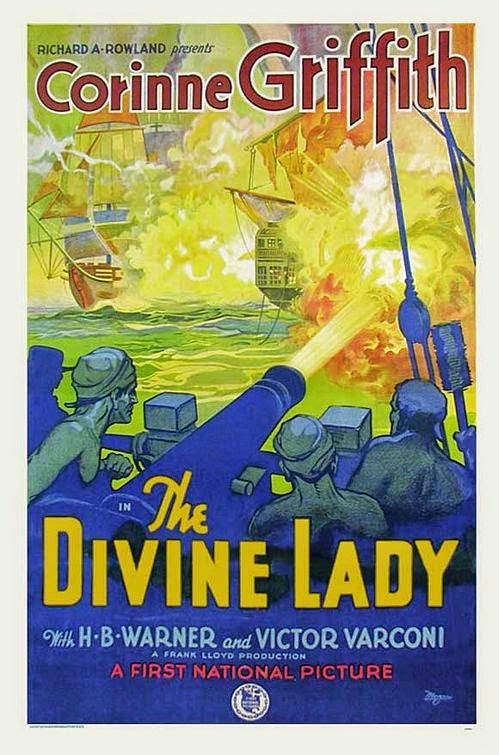
Best Director: Frank Lloyd for The Divine Lady (1929)
1929-30
The Third Academy Awards brought a drastic change to the way the winners were chosen. For the first two, the final selection was made by five individuals. In 1930, the entire Academy Membership voted. Members were also charged a fee of $10 to attend the banquet. The category of Sound Direction was added.
The ceremony was held on Nov. 5, 1930, just seven months after the previous ceremony. This was to 'catch-up' so that films would be honored closer to their release. It was held in the Fiesta Room of the Ambassador Hotel. The host for the evening was Academy Vice President Conrad Nigel, with Louis B. Mayer handing out the Awards. The winners were:
Best Picture: All Quiet on the Western Front (1930) starring Lew Ayres and Louis Wolheim
Best Actor: George Arliss in Disraeli (1929) - presented by Lionel Barrymore, right
Best Actress: Norma Shearer in The Divorcee (1930)
Best Director: Lewis Milestone for All Quiet on the Western Front (1930)
1930-31
By the time the Fourth Academy Awards rolled around on Nov. 10, 1931, things were pretty well established. The biggest change was that the winners were kept secret for the first time, instead of being announced ahead of time. Also after this year, previous actress nominees would present awards to winning actors and the actors would do the same for the actress. This was to prevent an embarrassing situation of awarding oneself.
The ceremony was held at the Biltmore Hotel in Los Angeles with Lawrence Grant as the emcee. Vice-President Charles Curtis attended with a special message from Washington D.C.
I have come to you tonight from the capital of our country to pay my respects to the creative
minds of the world's greatest and most influential enterprise, the motion picture.
The winners were:
Best Picture: Cimarron (1931) starring Richard Dix and Irene Dunne
Best Actor: Lionel Barrymore in A Free Soul (1931) - his favorite screen role
Fun Fact: The youngest nominee (to this day) for Best Actor was 9 year old
Jackie Cooper for his role in Skippy (1931). The Juvenile Award would be
established in 1935 with Shirley Temple as it's first recipient.
Best Actress: Marie Dressler in Min and Bill (1930) also starring Wallace Beery
Best Director: Norman Taurog for Skippy (1931)
1931-32
The Fifth Academy Awards saw the first tie in the Best Actor category. It also had a new category: Short Subjects. The ceremony was held on Nov. 18, 1932 in the Fiesta Room of the Ambassador Hotel. Conrad Nigel was the host. You can hear a radio clip of Nigel in a short broadcast the night before here. The winners were:
Best Picture: Grand Hotel (1932) starring Greta Garbo, John and Lionel Barrymore, Wallace Beery, and Joan Crawford
Best Actor: Wallace Beery in The Champ (1931) and Fredric March in Dr. Jekyll and Mr. Hyde (1931)
Beery (far left) and March (far right)
Beery receiving his award from Lionel Barrymore
Fun Fact: Both actors had recently adopted children, causing March to say in
his acceptance speech, "It seems a little odd that Wally and I were both given
awards for the best male performance of the year."
Best Actress: Helen Hayes in The Sin of Madelon Claudet (1931)
Best Director: Frank Borzage for Bad Girl (1931)
Borzage, Hayes, and March
Short Subjects: Flowers and Trees (Best Cartoon - Disney)
The Music Box (Best Comedy Short - Laurel and Hardy)
Wrestling Swordfish (Best Novelty)
Special Award: Walt Disney for his creation of Mickey Mouse
Walt with his wife, Lillian
1932-33
The Sixth Academy Awards was over a year after the fifth, as the Academy made the Awards a spring event. It was held on March 16, 1934 again in the Fiesta Room. The host was legendary humorist, Will Rogers. It also had a new category, Assistant Director.
Best Picture: Cavalcade (1933) with a British cast but filmed in Hollywood
Best Actor: Charles Laughton in The Private Life of Henry VIII (1933) - first British-made film to win an Academy Award
Arriving at the Awards with his wife, Elsa Lancaster
Looking at his award on the set of The Barretts of Wimpole Street
with Norma Shearer and Fredric March
Best Actress: Katharine Hepburn in Morning Glory (1933) - was absent from ceremony
The first Academy Awards Ceremony was held on Thursday, May 16, 1929, in the Blossom Room of the Hollywood Roosevelt Hotel. It honored movies released between August 1, 1927 - August 1, 1928. Tickets were $5 ($67 with inflation), 270 people attended, and the ceremony itself lasted a mere 15 minutes. It is the only Awards Ceremony that was not broadcast by radio or television (which was not in use yet of course). Dinner consisted of Filet of Sole Saute au Buerre and half-broiled chicken on toast. The host was Douglas Fairbanks, the president of the Academy of Motion Picture Arts and Sciences. He handed out the awards with the help of William C. deMille. The winners had already been announced 3 months earlier so they was no anxiety or suspense in the air.
Best Picture - Unique and Artistic Production: Sunrise: A Song of Two Humans, starring Janet Gaynor
Best Picture - Production: Wings, starring Clara Bow (and Gary Cooper). You can watch it tonight on TCM at 10pm EST (2/1/15).
Best Director Drama: Frank Borzage, 7th Heaven
Best Director Comedy: Lewis Milestone, Two Arabian Knights
With Douglas Fairbanks (left)
Best Actor: Emil Jannings (The Last Command and The Way of All Flesh)
Best Actress: Janet Gaynor (Sunrise, Seventh Heaven, and Street Angel)
Naturally, I was thrilled but being the first year, the Academy Awards had no background or tradition, and it naturally didn’t mean what it does now. Had I known then what it would come to mean in the next few years, I’m sure I’d have been overwhelmed. At the time, I think I was more thrilled over meeting Douglas Fairbanks.
~ Gaynor on receiving the first Academy Award for Best Actress in 1928
Honorary Award: Charlie Chaplin, "for versatility and genius in acting, writing, directing, and producing The Circus."
There was also an award given to Warner Brothers Production "for producing The Jazz Singer, the pioneer outstanding talking picture, which has revolutionized the industry."
The categories of Best Supporting Actor and Actress were not added until 1937. This was also the only Academy Awards that honored all silent pictures.