Saturday, January 9, 2016

Daddy Long Legs (1955)


Daddy Long Legs (1955) has the distinction of not only being set in France (at least the first part) but also boasts a French leading lady, Leslie Caron (it's location was changed to France because of its her). Caron had been trained in ballet as a child, which led to her introduction into movies. A relative newcomer, Caron had already starred in six films, including her first film, An American in Paris (1951) with Gene Kelly (won Best Picture), and Lili (1953) for which she was nominated for Best Actress and won an BAFTA Award.
 
The year 1955 was a difficult one for both Caron and her co-star, Fred Astaire, personally. Caron had just divorced her first husband the year before and would marry again the following year. Astaire's beloved wife of 21 years died tragically from lung cancer just before filming started. Astaire, though he loved the script of Daddy Long Legs, offered to pay all of the production costs in order to drop out of the film. Luckily he changed his mind.


The story of Daddy Long Legs had already been made into a film several times, so the storyline was definitely not new. Based on Jean Webster's 1912 novel (which I highly encourage everyone to read as it is delightful and timeless - you can read it free here along with it's sequel Dear Enemy), it was made into a film first in 1919 with Mary Pickford and again in 1931 with Janet Gaynor. The 1935 Shirley Temple film, Curly Top, is based on the book as well.

The script was written by Henry and Phoebe Ephron, who are the parents of the well known and loved romantic comedy writer Nora (died 2012) and producer Delia Ephron (When Harry Met Sally, Sleepless in Seattle, You've Got Mail). Other films penned by the couple include Belles on Their Toes (1952) and Desk Set (1957).

Trailer

Daddy Long Legs was directed by Jean Negulesco, who also directed Nobody Lives Forever (1946) and Humoresque (1946) - two of my favorite John Garfield films, as well as Johnny Belinda (1948) which brought an Oscar to Jane Wyman, Titanic (1953), How to Marry a Millionaire (1953), and Three Coins in the Fountain (1954) which was filmed on location in Rome.

Julie's roommates

The basic plot of the film is this: a wealthy American, Jervis Pendleton III (Astaire), visits an orphanage and becomes taken with one of the orphans, Julie (Caron). He pays for her to go to a prestigious girls college in New England. His only stipulations are that she not know who her benefactor is, and that she write to him regularly.

I love her little writing desk!

To Julie it is all like a fairy tale. She is freed from her drab life at the orphanage and finally gets a room of her own and tons of beautiful clothes, instead of the blue gingham she always had to wear at the orphanage (someone had donated enough to cloth all of the children for years to come - even the handkerchiefs were blue gingham!). Julie addresses all of her letters to Daddy Long Legs. This comes from a description of his shadow that some of the other orphans saw and described to Julie.


Julie's letter's however, never actually reach Jervis. They are read and filed away by his secretary, played by the 4-times nominated brilliant character actress, Thelma Ritter. One day she angrily confronts her employer and tells him he must go and see Julie. It just so happens that Julie's roommate Linda, played by Terry Moore who had been in movies since 1940, is Jervis's niece. Therefore, he can come visit Julie without revealing who he is.

"The Sluefoot" sung by the Pied Papers with Ray Anthony and His Orchestra.

The day Jervis arrives is also the day of a big dance with the neighboring boys college. Naturally this gives Jervis a chance to dance with Julie. It's a great and catchy number. You can watch it below.
 
 
Despite their age differences (Astaire was 55 and Caron 23 at the time of filming), Jervis and Julie start to fall in love. In order to see more of each other, Jervis invites his niece and Julie to New York for a visit. Linda is unable to come so it ends up being just Julie.
 
"Something's Gotta Give," which was written because the film lacked a popular song, was filmed without first being rehearsed.
 
Eventually Julie discovers that Jervis and Daddy Long Legs are the same person and everything ends "Happily Ever After."
 
I really enjoyed this film. The only thing I did not like about it was the length. The movie runs for 126 minutes. This includes a 12 minute "Nightmare Ballet" and another extremely long "Daydream" sequence. I'm not a huge fan of musicals and so it was hard to sit through these two long parts, though the "Daydream" sequence had three very different sections for variety. My favorite dance was the very last one. It was short, simple, and beautiful and made for a perfect ending.

 
Start at 3:40
 
To read a more in-depth summary, check out this this post from The Blonde at the Film. Here's another Great Post with some behind-the-scenes and trivia about the film. You can read the book Daddy-Long-Legs and it's sequel, Dear Enemy for free on project Gutenberg.
 
 
Kay Nelson sketch for Leslie Caron costume in Daddy Long Legs (1955).
An early application of toreador pants, an international fashion trend
that would survive nearly a decade.


Even now, I feel furious with myself because whenever there's a camera pointed towards me, my MGM training makes me smile. I don't like it. You can see it on all the people who came from that era because there was no question of them not smiling for the camera. Even Katharine Hepburn-- and God knows she was a dramatic actress -- if the camera is on her, she smiles.


This post is part of the France On Film Blogathon hosted by Serendipitous Anachronisms. Be sure to read all of the other posts!
 

Thursday, January 7, 2016

Significant Dates 2016

Upcoming 100th birthdays

Feb. 26 - Jackie Gleason
April 5 - Gregory Peck
July 1 - Olivia de Havilland (still alive)


10th Anniversary of Death (2006)
Jan. 14 - Shelley Winters
Feb. 24 - Don Knotts
May 30 - Robert Sterling
July 8 - June Allyson
Aug. 30 - Glenn Ford
Sept. 19 - Elizabeth Allen
Oct. 20 - Jane Wyatt


25th Anniversary of Death (1991)
Feb. 6 - Danny Thomas
Mar. 27 - Aldo Ray
Apr. 28 - Ken Curtis
June 19 - Jean Arthur
July 1 - Michael Landon
Sept. 3 - Frank Capra
Nov. 5 - Fred MacMurray
Nov. 6 - Gene Tierney
Nov. 27 - Ralph Bellamy


50th Anniversary of Death (1966)
Feb. 1 - Buster Keaton
Mar. 3 - William Frawley
June 19 - Ed Wynn
July 23 - Montgomery Clift
Oct. 13 - Clifton Webb
Dec. 15 - Walt Disney


50th Anniversary Films
Jan. 20 - The Ghost and Mr. Chicken - Don Knotts
Feb. 23 - Harper - Paul Newman, Robert Wagner, Janet Leigh, Lauren Bacall
Mar. 30 - The Trouble with Angels - Haley Mills, Rosalind Russell
Apr. 4 - The Singing Nun - Debbie Reynolds, Greer Garson
June 9 - The Glass Bottom Boat - Doris Day, Rod Taylor
June 15 - Duel at Diablo - James Garner, Sidney Poitier
               Stagecoach - Bing Crosby
June 22 - Who's Afraid of Virginia Woolf - Elizabeth Taylor, Richard Burton
July 13 - How to Steal a Million - Audrey Hepburn
July 14 - Hitchcock's Torn Curtain - Julie Andrews, Paul Newman
Dec. 21 - Grand Prix - James Garner

Wednesday, January 6, 2016

Come to the Stable (1949)

Following the popular pattern of The Bells of St. Mary's and Going My Way, which found much charm and amusement in the lives of nuns and priests, this fable, originally written for the screen by Clare Boothe Luce, finds further romantic enchantment in the work and devotion of nuns.
 
~ NY Times Review, Bosley Crowther, 7-28-49


Come to the Stable (1949) is about two nuns from France who have come to Bethlehem (Connecticut, not the one in the Holy Land) to keep a promise and build a children's hospital.

Celeste Holm as Sister Scholastica and Loretta Young as Sister Margaret
 
The film opens with this very surreal scene, of two nuns walking across a wide snowy expanse, appearing to be far from any civilization. They come upon a road sign that lists the names of all the places mentioned in the New Testament of the Bible: Bethlehem, Jerusalem, Galilee, etc. This mistakenly led me to believe the film was set in the Holy Land, which confused me until I realized they were in New England. Though they never specify Connecticut as the state, as there are several Bethlehem's in the area, it is believed that that is where the film is set.
 
 
The nun's see a barn and go up to it. They peer in the doors and see the following scene.


This (again) surreal scene is broken when one of the little boys suddenly kicks the other. It is then that you realize this is a family posing for a painting (who else thinks it's dangerous the way the toddler is suspended from the ceiling?). The painter is Miss Amelia Potts, played by Elsa Lancaster.

 
Miss Potts invites the nuns in (she can't leave them in the snow!) and asks them to stay for tea. The nuns inform her that they came especially to see her. They refer to a postcard featuring one of her paintings, "Come to the Stable." The reason for their visit they explain is that during WWII they were in charge of a children's hospital in France that was in the line of a German advance. As they couldn't move the children, Sister Margaret (Young) prayed that they would be spared. After the battle, the only building left standing was the hospital. Sister Margaret than promises to build a hospital dedicated to St. Jude (impossible cases) in New England. After seeing one of Miss Potts paintings, they decide that Bethlehem is to be the location. They end up (basically) inviting themselves to stay with Miss Potts until they talk to the bishop the following day and receive permission to go ahead with the hospital.
 
 
The next morning, while burying a statue of St. Jude on top of a hill that they want to build the hospital on, they meet another neighbor, Bob Mason (Hugh Marlowe). He is a songwriter who moved to the country where he could write his pop tunes in peace and quiet (of course they are nothing like what would be considered a pop song to us). The sisters ask Mason if he knows who owns the hill. He tells them a Mr. Luigi Rossi who resides in New York.  
 
The sisters then set off to see the bishop, who gives them a little money. The next day they borrow Mr. Mason's jeep (he's leaving for Hollywood to work on a movie score for a few months) and head to New York to find Mr. Rossi (Thomas Gomez). He is a bookie, and they have trouble getting to his office. They finally do get to see him and ask him if he would be willing to donate the hill. Rossi says no, but gives them some money towards their cause. As the sisters are leaving, they discover that Rossi had a son who died in France near their hospital during the war. Rossi suddenly has a change of heart and gives the land but on one condition: they include a stained-glass window in memory of his son.
 
Luigi Rossi
 
Now that the sisters have their land, they need money to begin building. While driving past the hill, the jeep gets a flat. Because of this they notice a For Sale sign on an old warehouse across the street, which they purchase for $25,000 with a three month option of $5000 to act as a temporary shelter until the hospital is completed. They immediately call the bishop to tell them their good news. He, however, is worried about the price of the building and goes out to investigate. While he is there, eleven more nuns show up.
 
 
When Bob Mason gets back from Hollywood, he is surprised and curious at the sudden increase in nuns. He goes over to the stable to investigate and find that it has been converted into a chapel. The nuns are also selling produce and arts, ringing a bell to signal when they are open. Bob realizes that all of the extra noise is going to distract him from his work and so he sets out to try to get rid of them. He doesn't want to be mean but the whole reason he moved to this area in the first place was for the quiet and that is now gone.
 
 
The three-month option is almost up and the nuns are $500 short. Maybe Mr. Mason will make up the difference? You'll have to watch the film to see what Mason's decision is and what makes him change his mind.

Full movie

Directed by Henry Koster, who also directed The Bishop's Wife (1947), The Inspector General (1949) and Harvey (1950), the film opened July 27, 1949 and was nominated for a slew of awards, including Best Actress for Young, Best Supporting Actress for Holm and Lancaster, Best Song, Music, and Story.

A sequel titled A Spark in the Night was announced the following year that would show Young and Holm in Hiroshima after it was bombed at the end of WWII. It was never filmed.

This post is part of the Loretta Young Birthday Blogathon hosted by Cinema Dilettante, Now Voyaging, and the Young Sisters Appreciation FB Group. Be sure to read all of the other posts about this very fashionable star!

Friday, January 1, 2016

Remembering the Stars We Lost in 2015

This year saw the deaths of several beloved stars,
both of movies and television.
 
TCM Remembers

On January 1st Donna Douglas, known as Elly May in The Beverly Hillbillies passed away. You can read my post on her here.

          
I hardly recognize her without her signature hairstyle!

A few days later, on the 7th, Rod Taylor died. We all know him from The Birds and as the voice of Pongo in Disney's One Hundred and One Dalmatians (1961). After his death I sought out more of his films, including the film that started his career, The Time Machine (1960). Other films that I greatly enjoyed were Sunday in New York (1963) with Jane Fonda and 36 Hours (1964) with James Garner and Eva Marie Saint. You can read my post on him here.


Anita Ekberg, who died January 11th, may not be a name that everyone knows. The only film I have seen with her in it was Paris Holiday (1958) starring Bob Hope. It is hilarious and I highly recommend it. She is also in La Dolce Vita (1960).


Lizabeth Scott, an icon of Film Noir, passed away on the 31st of January. I have not yet seen any of her films (note to self: MUST CORRECT SOON!).


Louis Jourdan, known as a romantic leading man, died on Valentine's Day. His films include Gigi (1958), Letter to an Unknown Woman (1948), Three Coins in the Fountain (1954), and Grace Kelly's final film The Swan (1956).


One of my favorite child stars, George 'Foghorn' Winslow died on June 13th. Known for his deadpan delivery and deep voice, you can see him in the 1953 Gentlemen Prefer Blondes (he has some hilarious lines in that one), Monkey Business (1952), and Room For One More (1952).


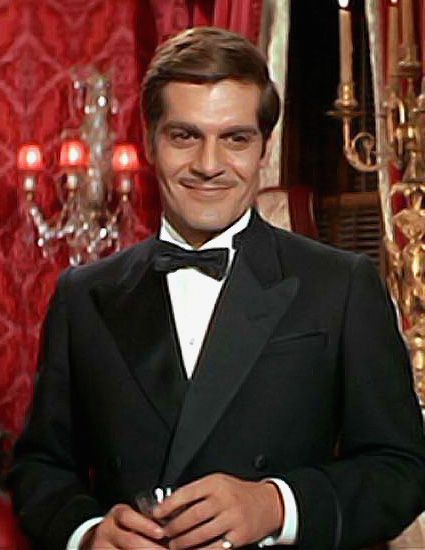
A star that I just discovered this year, Omar Sharif, died on July 10th. I have only seen two of his films so far, The Yellow Rolls-Royce (1964) and Funny Girl (1968) - look for my post on that film in mid-January, but more of his films are definitely on my "to watch" list. He also appears in Lawrence on Arabia (1962) and Dr. Zhivago (1965).


Coleen Gray died August 3rd. The day before I had watched Kansas City Confidential (1952) starring her and John Payne as my last assignment for TCM's Into the Darkness: Investigating Film Noir class. Coleen Gray died at her home in Bel Air at the age of 92. I found it... odd is not the word but I can't think of another, that at the close of  TCM's Summer of Darkness which showed film noirs every Friday, one of the final stars of film noir passed away. Coleen Gray starred in numerous film noirs such as Nightmare Alley (1947) and Kansas City Confidential. She is also known for her small role at the beginning of Red River (1948) and plays William Holden's love interest in Father is a Bachelor (1950). Click here to watch Kansas City Confidential.

Some of Coleen Gray's television appearances:
  • Have Gun, Will Travel S05E10 Ben Jalisco (1961) - Lucy Jalisco
  • The Adventure's of Ozzie and Harriet S11E21 Decorating Dave's Office (1963) - Mrs. Kelley, the bosses wife
  • My Three Sons S05E23 Hawaiian Cruise (1965) - Miss Lovett (the gym teacher part near the end is kind of embarressing)
  • S07E25 Melinda (1967) - Natalie

On August 18th we lost Yvonne Craig, known most for her role as Batgirl in the third and final season of Batman (1966-68). She also makes an appearance in Gidget (1959).


Dean Jones, star of so many Disney films, passed away September 1st at the age of 84. The first film with Jones that I saw was That Darn Cat (1965). We watched that many a Saturday morning growing up. He also appears in The Ugly Dachshund (1966) and The Love Bug series.


Just a few days later, on the 7th, Martin Milner, star of television shows Route 66 and Adam 12 died.


Joan Leslie, the girl next door, died Oct. 12th. I have seen several films with her. She was a frequent costar of Dennis Morgan and appeared in the famous Yankee Doodle Dandy (1942) with James Cagney. You can read my post on her passing here.


October 24th - the biggest death of the year, and the star that all classic movie fans will miss, was that of Maureen O'Hara, the Queen of Technicolor. With her gorgeous red hair and Irish temper, she was a match for any leading man. Her most famous pairing was with John Wayne, whom she regarded as one of her closest friends. You can read my posts on this legendary woman here and here.


The last death was Betsy Drake, 3rd wife of Cary Grant on October 27th. You can read my post on her here.
 
With George Winslow and Cary Grant in Room for One More (1952)
 
UPDATE: And one more death slipped in before the year ended. Wayne Rogers, who played Trapper John on the extremely popular 70s TV show M*A*S*H, died December 31st at the age of 82. I've seen M*A*S*H on TV all my life but it was just recently that I actually sat down and watched the first five seasons (I stopped because I can't stand Frank's replacement). And of course, being a normal girl and Rogers being an extremely attractive guy, he was a favorite on the show. I will be writing a post on him tomorrow.
 
 
Also, singer Natalie Cole, daughter of the legendary Nat King Cole, died unexpectedly at the age of 65.
 

2015 Movie Stats

This year I watched 195 new-to-me movies and 67 movies that were rewatches for a total of 262.

New to me: 195 (143 pre-1970, 52 post-1970)
Rewatches: 67 (36 pre-1970, 31 post-1970)
Total: 262 (179 pre-1970, 83 post-1970)


Where I watched them:

TCM: 99 (5 rewatches)
Library: 43 (11 rewatches)
Personal DVD: 62 (41 rewatches)
YouTube: 15 (3 rewatches)
Netflix: 32 (4 rewatches) 
TV: 3 
Theater: 3 (2 rewatches)

          Other (Redbox): 5 (1 rewatch)

Here are my top ten movie discoveries:

  1. Shadow of a Doubt (1943) - Joseph Cotton & Theresa Wright
  2. Nobody Lives Forever (1946) - John Garfield & Geraldine FitzGerald
  3. So Goes My Love (1946) - Don Ameche & Myrna Loy
  4. It's a Great Feeling (1949) - Dennis Morgan, Jack Carson, Doris Day
  5. Three Coins in the Fountain (1954) - Louis Jordan, Jean Peters & Rossano Brazzi, Dorothy McGuire & Clift Webb
  6. Battle Cry (1955) - Aldo Ray & Nancy Olsen, Tab Hunter
  7. The Yellow Rolls Royce (1964) - Rex Harrison, George C. Scott, Shirley MacLaine, Alain Delon, Omar Sharif & Ingrid Bergman
  8. 13 Going on 30 (2004) - Jennifer Garner & Mark Ruffalo
  9. This Means War (2012) - Chris Pine, Tom Hardy, Reese Witherspoon
  10. The Man From U.N.C.L.E. (2015) - Henry Cavill, Armie Hammer, Alicia Vikander (saw twice in theaters and again on blu-ray as soon as it came out!)


Classics I watched for the First Time:

You Can't Take it With You (1938)

Ninotchka (1939)

The Man Who Came to Dinner (1941)

High Sierra (1941)

The More the Merrier (1943)

Out of the Past (1947)

The Third Man (1949)

Gentlemen Prefer Blondes (1953)

Cat on a Hot Tin Roof (1958)

Pillow Talk (1959)

The Time Machine (1960)

Hud (1963)

Charade (1963)

9 to 5 (1980)

Lethal Weapon (1987)


Number of movies per decade:

1920s: 1 (0 rewatches)
1930s: 40 (5 rewatches)
1940s: 64 (12 rewatches)
1950s: 49 (10 rewatches)
1960s: 25 (9 rewatches)
1970s: 3 (2 rewatch)
1980s: 10 (5 rewatch)
1990s: 14 (5 rewatches)
2000s: 28 (10 rewatches)
2010s: 28 (9 rewatches)


Number of movies per month:

January: 22 (5 rewatches)
February: 20 (2 rewatches)
March: 18 (5 rewatches)
April: 14 (4 rewatches)
May: 23 (4 rewatches)
June: 25 (4 rewatches)
July: 15 (2 rewatches)
August: 32 (8 rewatches)
September: 23 (6 rewatches)
October: 29 (10 rewatches)
November: 20 (9 rewatches)
December: 21 (8 rewatches)


Most Watched (Leading) Movie Stars:

Don't have that information


Stars I discovered/grew to love/admire crushed on: Aldo Ray & Tom Hardy

Monday, December 28, 2015

Directors of Christmas Movies


We watch them every year but aside from Frank Capra's It's a Wonderful Life (and probably Michael Curtiz's White Chirstmas and Ernst Lubitsch's The Shop Around the Corner), you may not notice or recognize the director of your favorite Christmas films. In this post I am going to tell you who directed each of the most famous Christmas films and what other major films they directed. *This is not a complete list of Christmas films, just some of the better known or my personal favorites.


As I already mentioned, Capra and Curtiz need no introduction, but did you know the director of Christmas in Connecticut (1945) was Peter Godfrey? I certainly didn't recognize his name. I looked him up and discovered he was London born and directed two other great Stanwyck films (which I will be looking at for the Barbara Stanwyck Blogathon later this month) The Two Mrs. Carrolls (1947)and Cry Wolf (1947).


George Seaton directed the much loved Miracle on 34th Street (1947) but did you know he also directed The Country Girl (1954)? He also directed 36 Hours (1964), a James Garner film I discovered this year.


The director of The Bishop's Wife (1947) was Henry Koster, born in Berlin. He directed many well-known films, including The Inspector General (1949), Harvey (1950), and The Robe (1953), to name a few.


Holiday Affair (1949) is one of the lesser known holiday films starring Robert Mitchum and Janet Leigh. It was directed by Don Hartman. He only directed five films total, but was the writer of many popular films, including quite a few for Bob Hope.


Remember the Night (1940), another Stanwyck film, was written by Preston Sturges but directed by Mitchell Leisen. His 50 credits include a couple Lombard films, Midnight (1939), and many other romantic comedies.


Bachelor Mother (1939) was directed by Garson Kanin, who directed My Favorite Wife (1940) and who wrote the Tracy/Hepburn films Adam's Rib (1949) and Pat and Mike (1952).


Lastly, Holiday Inn (1942), which introduced perhaps the most popular Christmas song of all time, "White Christmas," was directed by Mark Sandrich, who has 76 credits beginning in 1926 and ending in 1946 (his death). His name will be familiar to all who love the Astaire/Rogers films.