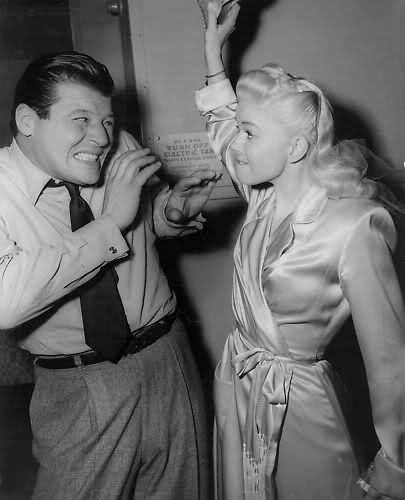
We passed a Good Humor ice cream truck. Jack Carson starred
in a movie called The Good Humor Man (1950)
Didn’t get to watch very many movies this month. I went to Long Island for a week for a family event and, before I left, had to get ahead in my work (I work from home verifying patient insurance for a dentist office. I don’t get any vacation time yet but had planned this before I was hired) so I was working like crazy and preparing for my trip.
Anyway, my trip was amazing. I got to go back to Old Westbury Gardens and take a better photo on the steps where Cary Grant walks up in North By Northwest (1959) - I wasn’t happy with the way my photo came out last time so I never ended up sharing it here, I will try to finish that post soon. On the way home we stopped at Gettysburg, where my 4x great grandfather fought (on the Union side). I brought a photograph of him with me and took a picture with it by the memorial to his regiment. We also went to a little museum in the town that had some uniforms of Audie Murphy’s as well as one of Marilyn Monroe’s bras... I also popped into the library to use the restroom and ended up buying a bag of books (including a biography of Mary Wickes) in the book sale room... did I mention the car was already packed very tight? Lol.
Lock of Monroe's hair
Here's what I watched this month (* means a rewatch):
The Bride Walks Out (1936) - Barbara Stanwyck & Gene Raymond, Robert Young
Bridal Suite (1939) - Robert Young & Annabella, Billie Burke, Walter Connelly
The Guilty (1947) - Bonita Granville
*Tonight’s the Night (1954) - David Niven & Yvonne De Carlo, Barry Fitzgerald
Secret of the Incas (1954) - Charlton Heston, Robert Young, Thomas Mitchell, Glenda Ferrell
Drum Beat (1954) - Alan Ladd, Charles Bronson, Audrey Dalton
*Jailhouse Rock (1958) - Elvis Presley
Journey to the Center of the Earth (1959) - James Mason, Arlene Dahl, Pat Boone, Diane Baker
Romancing the Stone (1984) - Kathleen Turner & Michael Douglas, Danny DeVito
Spaceman (2016) - Josh Duhamel
Least Favorite Film: Gene Raymond’s character was annoying in The Bride Walks Out. The Guilty was ok, but it’s not going on a list of favorite Noirs.
Favorite Movie: Romancing the Stone was fun! I also enjoyed Journey to the Center of the Earth.
Dennis Morgan and Jack Carson, Warner Brother's answer to the Bing Crosby/Bob Hope "Road" movies of Paramount, made fifteen films together. The two were good friends in real life making their on-screen friendships very authentic and a joy to watch (check out my posts on Dennis Morgan and Jack Carson by clicking on their names).
One of my favorite films of theirs is Two Guys From Texas (1948), a follow-up to the successful Two Guys From Milwaukee (1946). Not only is their off-screen friendship evident on-screen, but it also features some great songs, including one that shows off Jack Carson's rich baritone. It's also set in Texas, which is the subject of The Midnite Drive-In's latest blogathon, of which this post is part of (it also gives me a chance to share several clips I recorded from the film).
Trailer
The film starts with sing and dance partners Steve Carroll (Morgan) and Danny Foster (Carson) on a road trip to California. While driving through the wide spaces of Texas (aka the WB Studios and Thunderbird Ranch in Palm Springs, CA) they run out of gas - not before they sing a song though.
Video from my YouTube Channel. Sorry about the quality. I recorded it with my iPad.
Watching this song, "There's Music in the Land," it is easy to imagine that this is something Morgan and Carson did in real life, not just in the movies. Their camaraderie is undeniable. This little clip was just after the song but I didn't want to record the song again so it's only a few seconds.
Anyway, they run out of gas and hitch a ride to a nearby Dude Ranch. There they meet an old friend of theirs, Maggie Reed (Penny Edwards). When their car is stolen, Reed helps them get a job doing their act at the ranch. The owner, the very pretty Joan Winston (Dorothy Malone) is none to keen on the two but they are completely broke and doing their act is a way to get free room and board. It also gives Morgan and Carson a chance to sing several songs. Carson singing "I Never Met a Texan" is a highlight.
Both of boys also take an instant liking to Joan, who has an "understanding" with the sheriff, who incidentally never seems to be out looking for the stolen car. Joan, somewhat reluctantly, becomes attracted to Steve, causing Danny to seek the advice of Dr. Straeger (Fred Clark), a guest at the ranch. Danny reveals a recurring dream he has. Enter a ridiculous cartoon sequence (Bugs Bunny's first appearance in a feature film!) where Danny is a shepherd who always loses his sheep to a wolf that just happens to look like Steve. This has in turn created a real-life fear of animals. The scene is too funny not to watch, as the caricatures are spot on.
The Doctor (later revealed to be a veterinarian) advises Danny to steal a girl away from Steve, which Danny does that very evening. Joan, who is trying to decide between Steve and Tex, willingly uses Danny to get out of an awkward situation, and even kisses him. It is in this scene Carson finally gets to sing a song straight, without trying to be funny (though he still pulls a few faces). I knew he could carry a tune but wow!! "Hankerin' " is my favorite song from the film.
The next morning, Danny finds he is no longer afraid of animals, just in time for the annual rodeo. While at the rodeo, the two guys who stole Steve and Danny's car, use it for a quick getaway after robbing the rodeo ticket booth. Tex is more than happy to throw them in jail, especially Steve. The boys escape and put on a disguise. Back at the ranch they overhear the bad guys (they work at the ranch) planning another robbery. Steve and Danny go back to the rodeo and set up a trap in order to catch the crooks and clear their names. In the course of their plan, Danny's fake beard falls off and while running from Tex he ends up joining and winning the bucking bronco contest.
The film ends with the bad guys getting caught and Steve and Joan deciding to get married. Their friend Maggie decides to marry Tex. What about Danny you ask? Throughout the film he is followed by an old Indian squaw who he thinks wants to marry him but turns out she wants him to marry her very beautiful daughter. So everyone is happy.
A few more photos...
Two Guys From Texas is airing on TCM
October 27th at 3:15pm ET.
This post is part of The Texas Blogathon hosted by The Midnite Drive-In. Be sure to check out the other posts celebrating the wide-open spaces of Texas (or the studio backlot, whatever).
Dennis Morgan is one of my favorite actors. I first discovered him (probably along with most of you) in Christmas in Connecticut (1945), the Christmas classic starring Barbara Stanwyck. I quickly started watching more. His most frequent co-star was Jack Carson. I have previously written about both men. You can read my post on Dennis Morgan here (along with descriptions of most of these films) and Jack Carson here.
1. Three Cheers for the Irish (1940)
2. Affectionately Yours (1941)
3. Kisses for Breakfast (1941)
4. The Very Thought of You (1944)
5. Christmas in Connecticut (1945)
6. One More Tomorrow (1946)
7. Two Guys From Milwaukee (1946)
8. It's a Great Feeling (1949)
9. The Lady Takes a Sailor (1949)
10. Pretty Baby (1950)
Have you seen Morgan in any movies other than Christmas in Connecticut?
Before Audrey Hepburn ran off for a Roman Holiday with Gregory Peck, Olivia de Havilland had a New York holiday with Robert Cummings. But where-as Audrey had to choose duty over love, Olivia gets both.
De Havilland is a princess living in exile in New York City, as her country (unnamed) has been invaded by Nazi Germany (her parents, the king and queen, are still over there). With her is her uncle, played by Charles Coburn, and her secretary, Miss Haskell, played by Gladys Cooper. Princess Maria (de Havilland) is exceedingly unhappy with her situation. Even the arrival of a new hat fails to lift her spirits. After a count with a nervous tick comes calling, Maria imagines what their children would be like, with his tick combined with another tick that runs in his family line (de Havilland's comedic timing is perfect in this scene, which you can watch below). Worried with the way Maria is acting, her uncle suggests a change of scenery.
Maria then finds herself on a night flight to San Francisco, registered under the name of Mary Williams. Nervous of planes, Maria takes a sleeping pill. When immediate results are not forthcoming, she gets one from the stewardess. Then the co-pilot (Jack Carson). Then the pilot (Robert Cummings). He gives her two. Next thing you know, she has passed out cold.
Due to complications, the flight has to turn around and lands back in New York. Of course, no one can wake Maria up and they don't even have her real name. It doesn't help that when they are able to rouse her the tiniest bit she only speaks in French. The pilot, Eddie O'Rourke (Cummings) tries to help her walk it off. He takes her to a diner to get her some coffee, and the man there, thinking the lady just needs to sleep, giver her ANOTHER sleeping pill. There's no waking her now, so Eddie takes her to his apartment to sleep it off. He gets his co-pilot, Dave (Carson) to send over his wife (Jane Wyman) to undress Maria.
Honey, are you lucky I was raised right. I was, wasn't I?
Yeah, I guess I was.
The next morning, Maria awakens in Eddie's apartment and wearing his pajamas. He isn't there but he left a note for her, asking her to meet him later. Maria goes back to the hotel she has been staying in with her uncle, who had been frantically trying to find her when he found out about the flight. She tells him she spent the night in the ladies lounge at the airport.
After changing to a blue suit and her new hat, Maria goes walking and meets Cummings on the street. She doesn't remember him of course. They go into a drugstore and order cherry cokes.
Now that she's awake, and seeing how pretty she is, Eddie naturally wants to find out more about her. "What does your father do? For a living?" he asks, to which Maria replies, "He.. has an income."
Learning that she's a refugee, Eddie invites her to see the town with him and takes her on an ordinary date. They stop by Dave and Jean's (Wyman) apartment, were Maria learns who it was that undressed her. She is relieved. Jean also tells her that Eddie and Dave are planning to join the army as fliers.
Jean tells Maria that she has to her Women's Defense group meeting in the basement. Maria begs to come along. The lady in charge asks her what she can do. Well, she can't sew except petit-point, she can't cook, in fact, she pretty much can't do anything useful to the war effort. She is told that she can be the dummy for everyone to practice bandaging.
In the midst of it there is an air raid (and a funny episode involving the guys) and then the two couples go out to eat. Maria is called upon to tell her life story, so she concocts of tale in which she currently works as an upstairs maid. Jean tell how she and Dave got together (it's cute) and leaves both Maria and Eddie in a romantic mood. After they finish dancing, they go for a walk and Eddie asks Maria to marry him. When she is hesitant to answer, Eddie says, "Is it on account of your parents? I can support your parents!" Maria tells him no but that she loves him. She promises to call him the next day, but deep down knows that marriage to a commoner is out of the question.
Eddie, very excited, calls on his friends and asks Jean to pick out the rings. He is so excited that when he leaves he opens the closet door by mistake.
You thought I was going to walk in the closet, didn't you?
In the meantime, Maria's uncle, has been looking into Eddie's background and is very pleased to learn that he comes from a family of nine boys, and his father one of eleven! He calls the King, Maria's father, and gets his consent to the marriage. Maria doesn't know that her uncle knows about Eddie and the following morning calls Eddie to tell him she can't marry him. "I'll always remember your asking me to marry you," she keeps telling him. Eddie, who has to leave on a flight says, "Stop repeating that!" He won't take no for an answer.
Feeling depressed, Maria tries to free her pet bird, because she knows what it's like to live in a cage (metaphorically).
Her uncle walks in and, still pretending he doesn't know anything, talk to Maria about her marrying an American, as it would be good for foreign relations. Her face brightens up as they try to think of what occupation this American should have. "Dentist? Lawyer? School teacher?"... "too uh..." "yes."
Then he suggests a pilot, to which Maria responds with a excited "Yes!" And what should his name be? How about Edward O'Rourke? Maria's expression says it all (and Coburn just keeps saying, "One of nine boys. Extraordinary. His father one of eleven!"):
Now to tell Eddie that she is a princess.
Maria invites Eddie to come to the hotel where she is staying. He invites Dave and Jean to go with him. They are all stunned when they find out her true identity and immediately become ill at ease, calling her "Your Highness" and acting very stiff. Eddie then has to talk to her father on the phone. Of course it's an awkward conversation.
I saw you on the newsreel.
The Royal family wants Maria to get married right away, and they are invited by President Roosevelt to be married at the White House. On the way there, Eddie is instructed in royal diplomacy and told what his position will be. It's put to him very bluntly:
Your position in the Royal Family is most important; you are to have children, if possible, boys.
Well that's not a full days work.
Whenever Eddie questions something that sounds silly to him, he gets the response, "It's customary." He is also told he will only be a prince, and not a king.
I'll only be a prince. Prince! Here Prince! (shakes head).
They arrive at the White House (they were given special permission to film there), where they are met by Roosevelt's dog, Fala. Eddie is still pretty much in shock over the recent turn of events. When they go to sign the pre-marital agreements, Eddie becomes upset to learn that he will have to give up American citizenship and drop out of the army. He becomes so angry that he is told to leave.
Royal Princess! You're nothing but a slave.
Eddie goes for a walk around Washington to cool off and eventually goes back to White House to sleep, as he has no other place to go and, after all, he was invited to stay there by the President.
Maria is meanwhile in her room, the same room that the Emancipation Proclamation was signed in. "Lincoln freed the slave but he didn't free me," she sighs. Suddenly she hears a noise. Is it the ghost of Lincoln?? No, it's just Fala. Seized with inspiration, Maria writes a note to President Roosevelt and tells Fala to take it to him. A phone call is made to a supreme court judge to come and secretly marry Eddie and Maria. Everyone takes off shoes so as not to awaken anyone else. Maria comes out of her room wearing an amazing lace peplum dress and matching hat. "Will you marry a refugee?" she asks Eddie. "Will I?"
My diamond's small, but my love for you isn't.
They go into study for the ceremony. As they leave, Eddie says he hopes that the guard who stood in as a witness doesn't get into trouble. "That wasn't a guard! That was the president!" Maria tells him. "Holy Mackeral! I tipped him a buck! And he took it!"
And with that, the film comes to a happy close.
Princess O'Rourke was written and directed (his directorial debut) by Norman Krasna and he won the Academy Award for Best Writing - Original Screenplay. The review in Variety read: "Princess O'Rourke is a spritely, effervescing and laugh-explosive comedy-romance. Credit for general sparkle and excellence of the picture must be tossed to Norman Krasna, who handled the writing and directing responsibilities." The New York Times claims it to be "in the best tradition of American screen comedy" and has "the fast, aggressive spirit and tempo of American life, plus a heavy slug of sentiment concealed behind wisecracks and jokes. It has that agreeable impudence which is the mark of an American's self-respect and it has, too, a nice touch of raillery for the formal, the pompous and smug." Here's how they rate the cast and director:
Norman Krasna wrote and directed the film for Warners, which hereby rates him with us in a class with such eminent film-makers as Frank Capra, Preston Sturges and George Stevens. And the whole cast plays it in a manner which should bring them all honorable awards. Miss de Havilland is charming as the princess—so modest, yet so eagerly thrilled—and Mr. Cummings makes a very amusing fellow out of the bewitched and bewildered hero. For instance, when he asks suspiciously, "What does a prince consort do?" or greets his future father-in-law on the telephone with the nervous statement, "I saw you in the newsreels," the nuances are delightful. Mr. Cummings is a new James Stewart in this.
Likewise, Charles Coburn is grandiloquent as the pompous uncle of the princess, and Jack Carson and Jane Wyman draw rich humor and honest sentiment from the roles of two friends. A word, too, must be spoken for the Scotch terrier which plays Fala, the President's dog, in this film. The trick of using the pup as a friendly symbol is the most appealing device of the year. And it fits most completely in a picture which fairly bounces with elastic good-will.
Not everyone was happy with the film though. The wartime Bureau of Motion Pictures (BMP) objected to the film, saying that it was an example of the studios "... recklessly using the war for background incidents in an opportunistic attempt to capitalize on the war rather than interpret it."They cited the "ridiculous" caricatures of Red Cross workers, European nobility, and the Secret Service as examples. However, no attempt was made to censor or restrict its release (source).
The filming of Princess O'Rourke was also not a happy experience. Olivia de Havilland was exceedingly tired of all the lightweight parts Warner Brothers had been giving her and initially refused to be in the picture, and was suspended as a result. Alexis Smith was tested for the part. Olivia ended up taking the part again, though she was unhappy for much of the shooting. Cummings was frequently not available, meaning she had to act with a stand in. Charles Coburn kept forgetting his lines causing numerous retakes. During this time, Olivia was also suffering from low blood pressure, exhaustion, and low energy level, yet managed to give a sparkling comedic performance. After filming wrapped, she filed a lawsuit against Warner Brothers that set a seven year limit to studio contracts, including suspensions. "I wanted to play a real human being instead of a delightful romantic heroine," she said. She won and it became known as the de Havilland Law. After the lawsuit, she was assigned by Warners to the RKO picture Government Girl (1943), another part she disliked, and her final Warner Brother film, Devotion (completed 1943, released 1946). Later, however, Olivia said that Princess O'Rourke was one of her more satisfying roles to play for Warners.
Princess O'Rourke will be airing on TCM on July 30th at 7:45am ET.
Unfortunately there is not a lot about Jack Carson online and I was unable to find any books that mentioned him in a significant way (aside from "co-starring Jack Carson"). Even frequent co-star Jane Wyman's biography barely mentioned him.
Jack Carson was born John Elmer Carson on October 27, 1910 in Carman, Manitoba, Canada. His father, Edward L. Carson was in insurance. Jack had an older brother named Robert, also an actor (mostly uncredited bit parts in movies and later as an extra in television programs - you can view his filmography here). The family moved to Milwaukee when Jack was four and he always considered it his hometown. Dennis Morgan was also from Wisconsin and the two even starred in a picture titled Two Guys From Milwaukee (1946).
Two Guys From Texas (1948)
Carson was in a vaudeville act for a while and then, in 1937, went to Hollywood, where he joined RKO as a bit player. Some of his uncredited work includes small parts in the films Bringing Up Baby (1938) and Mr. Smith Goes to Washington (1939). He gradually gained the status of character actor but was unhappy with all of the comedies, musicals, and westerns he was cast in. In 1941 he moved to Warner Brothers. It was while there that he began to be paired with the two co-stars he is most identified with: Dennis Morgan and Jane Wyman.
Carson and Morgan appeared in fifteen films together. They were "Warner Bros.' answer to Paramount's Bing Crosby and Bob Hope; a crooner and comic who traded wisecracks while sharing unlikely adventures and an easygoing rapport" - TCM.
Carson and Wyman were in five films together. I have seen all of them (listed below). You can read about them here.
Between 1943-1947, Carson had his own radio show. It "centered on Jack's hectic home life at 22 North Hollywood Lane and his encounters with a variety of strange relatives, friends and neighbors. As in their vaudeville days Dave Willock was the sidekick playing the part of Carson's nephew Tugwell." - source. You can listen to some of the shows on YouTube.
Tallulah Bankhead & Jack Carson performing "Baby It's Cold Outside."
After Jack Carson died from cancer in 1963 (Jan. 2), Dennis Morgan became a national spokesman and fundraiser for the American Cancer Society.
Movies I have seen (films in bold are my favorite roles of Carsons):
Mr. and Mrs. Smith (1941) - Robert Montgomery & Carole Lombard
The Strawberry Blonde (1941) - Dennis Morgan starred in the musical remake One Sunday Afternoon (19)
Love Crazy (1941) - William Powell & Myrna Loy
The Bride Came C.O.D. (1941) - James Cagney & Bette Davis
The Male Animal (1942) - Henry Fonda & Olivia de Havilland
Larceny, Inc. (1942) - Edward G. Robinson & Jane Wyman
Gentleman Jim (1942) - Errol Flynn & Alexis Smith
The Hard Way (1943) - Ida Lupino, Joan Leslie, Dennis Morgan, very depressing movie
Thank Your Lucky Stars (1943) - Eddie Cantor, Joan Leslie, Dennis Morgan & star-studded cast
Princess O'Rourke (1943) - Robert Cummings & Olivia de Havilland, Charles Coburn, Jane Wyman
Make Your Own Bed (1944) - first film to have Carson & Wyman top-billed
The Doughgirls (1944) - though the film starred Ann Sheridan & Alexis Smith, Carson & Wyman are the ones who stole the picture, the comedy was overdone and forced in this picture, Eve Arden's character was flat our embarrassing
Arsenic and Old Lace (1944) - Cary Grant & Priscilla Lane, my first Carson film
Hollywood Canteen (1944) - as himself
One More Tomorrow (1946) - Dennis Morgan & Ann Sheridan, Jane Wyman
Two Guys From Milwaukee (1946) Dennis Morgan & Joan Leslie, S. Z. Sakall
Joan Leslie remembered: “Carson and Morgan were like a couple of kids at play. When they worked, they would tease each other, play jokes on each other all the time. A lot of times, they would take off for lunch and go over to Lakeside Golf Club, which is just across the way [from Warners], and maybe they would tee off or maybe they would have lunch. They’d dawdle over lunch, and sometimes they wouldn’t come back at the end of the hour. The director [David Butler] would say, ‘Do you know where they are?’ I’d say, ‘No, I don’t know where they are!’ And they would call Lakeside—and they would say, ‘No, they’re not here,’ and after two hours, they came in the big soundstage door, eating ice cream cones—’Oh! Were you looking for us?!’ That’s the kind of thing they did, and who could get mad at that? Who could fire the two movie stars when they come walking in like that, being so darn cute! I think that happened more than once!” - source
Romance on the High Seas (1948) - Doris Day's first picture, she and Carson dated briefly between 1950-51
Day singing "It's Magic." Carson comes on at the very end.
It's a Great Feeling (1949) - Dennis Morgan & Carson play themselves, they try to help Doris Day's character break into pictures, lots of star cameos. Here's a great post on Carson and Day and their three films.
Cat on a Hot Tin Roof (1958) - Paul Neman & Elizabeth Taylor, Burl Ives
Other notable films I have yet to see:
Mildred Pierce (1945) - Joan Crawford
A Star is Born (1954) - Judy Garland
Trivia:
Nicknamed "King of the double-take."
Was married four times.
Was a pilot. He volunteered to join the U.S. Army Air Corps but was rejected due to his height. He was turned down by the Army because he had flat feet.
During the 1940s, he would often disappear from Hollywood for weeks at a time. Only his wife knew where he went, and she (Kay St. Germain Wells) would tell no one. Years later Carson revealed the secret: he had joined the Clyde Beatty circus as a clown and was traveling with their show. Audiences never knew it was him; "They loved me and my routines," he said.
Had two children with his second wife, Kay.
Dick Powell also died of cancer on the same day as Carson.
People will always laugh at somebody else's discomfort. But they only laugh because they have suffered the same indignity themselves or known darn well how it feels. Being a comedian is almost like being a doctor--the more troubles you discover and understand, the more gladness you can bring to an audience.