Showing posts with label 1930s. Show all posts

Saturday, April 9, 2022

Bette's Hats & Reviews: The Big Shakedown (1934)

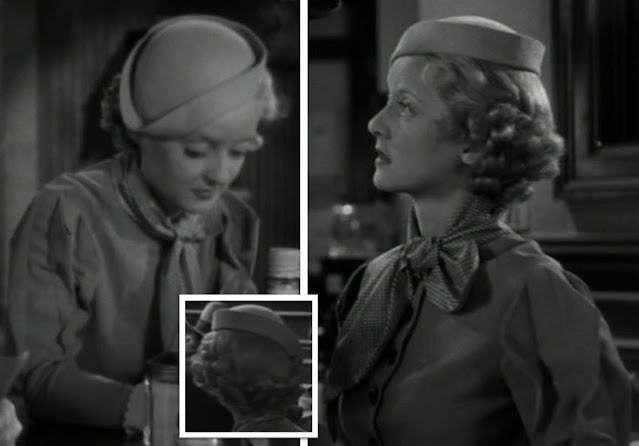
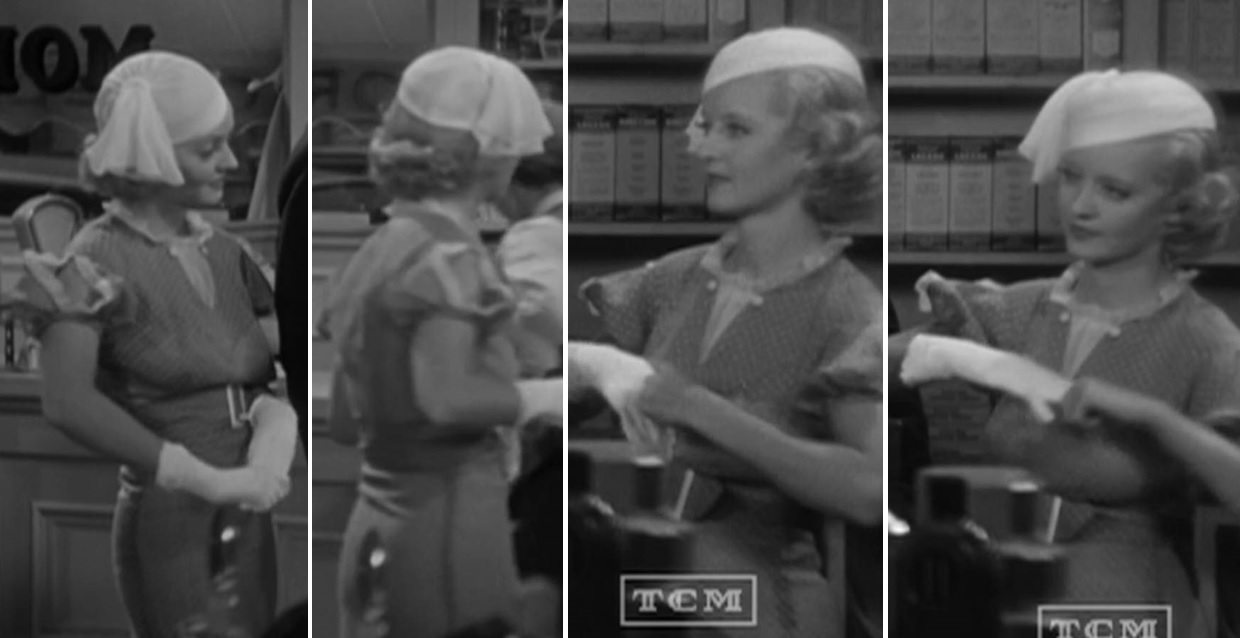
Bette's first film of 1934 was The Big Shakedown. She only references it sarcastically in her autobiography, The Lonely Life: "They needed me desperately for such historic milestones as The Big Shakedown and The Man with the Black Hat."

The first hat is only on the screen long enough for the Justice of the Peace to say "By the power vested in me, I now pronounce you man and wife. That'll be $2." You can see a better shot of the hat here.

Bette Davis has little to do but look attractive as an ingenue, the wife of the chemist (Charles Farrell).

~ Picturegoer Weekly, March 3, 1934
The only advantage Bette Davis enjoys is that she is not on much and so does not bore as often. 

~ Variety

Farrell and Miss Davis are not at their best.

~ Film Daily

I wonder if this photo is from a scene cut from the film? It says it's from The Big Shakedown.

Saturday, March 26, 2022

Bette's Hats & Reviews: Bureau of Missing Persons (1933) + short

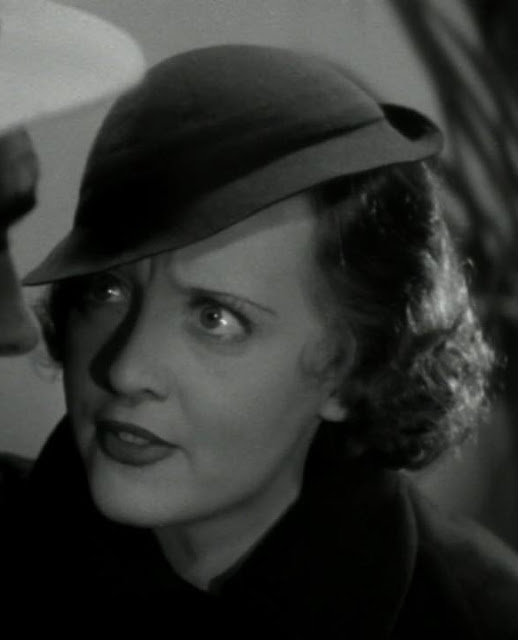
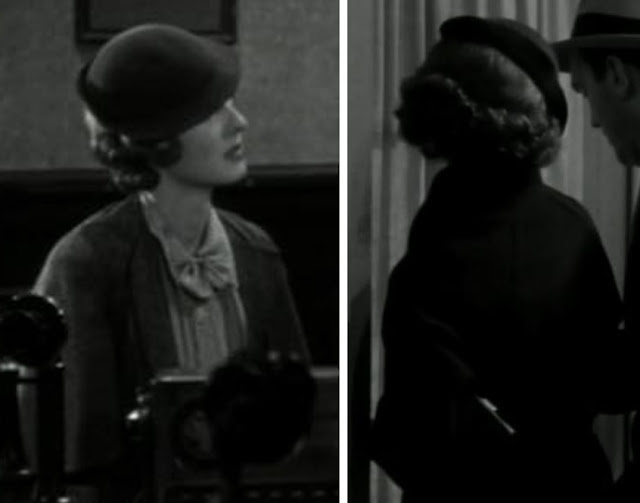
Bette's final film of 1933 was Bureau of Missing Persons with Pat O'Brien and Glenda Farrell. The only mention she makes of it in her autobiography, The Lonely Life, is that making that film made her realize why movie stars elected to go on suspension. She wears two hats.


Bette Davis does well.
~ The New York Times

They are still trying to make a sexy star out of Bette Davis when your reviewer is still pretty certain that she would be a whole lot better off if they let her be the sweet girl that she probably is.
~ The New Movie Magazine, Oct. 1933


Bette also appeared in a short titled Just Around the Corner, advertising General Electric household appliances! You can watch that gem below. 


She wears one hat in the short at 8:05. It's really too blurry to screenshot.

Saturday, March 12, 2022

Bette's Hats & Reviews: Ex-Lady (1933)

Glamourous Bette

After playing a good part in The Working Man (1933), Bette was unhappy - yet again - with her next role. "Darryl Zanuck decided it was time to give me the glamour-star treatment," she wrote in her autobiography, The Lonely Life. "It was a great mistake. I wasn't the type to be glamorized in the usual way. In an ecstasy of poor taste and a burst of misspent energy, I was made over and cast as the star of a piece of junk called Ex-Lady, which was supposed to be provocative and provoked anyone of sensibility to nausea. As an avant-garde artist, my lover was Gene Raymond whom I discarded au fin for the marvelously corrupt Monroe Owsley. One disgusted critic announced that Warner Brothers could have saved a fortune by photographing the whole picture in one bed. The final scene dollied in on our feet, soles upward - for which I was grateful - and happily entwined. They may have even had The End written on them. I can't remember [The shot described does not appear at the end of the film. I skipped through the movie so it's possible it was shown elsewhere in the picture]. It is a part of my career that my conscious tastefully avoids. I only recall that from the daily shooting to the billboards, falsely picturing me half-naked, my shame was only exceeded by my fury" (138). 

The offending image and the photos it was based on.

Hat 1


Love this promotional photo that shows the costume with the puffed sleeve coat off.

Miss Davis’ costume choices seem all awry for her personality, including one high-necked affair that’s dangerously reminiscent of the giraffe women in the Ringling-B&B circus. This ‘un will set back Miss Davis.  And just as she was coming along.

 ~ VARIETY

Hat 2

"Ex-Lady" may undo some of the nice things that have been done for Bette Davis in her last few pictures.

~ The New Movie Magazine, April 1933

Hat 3


Bette Davis, a young actress who has shown intelligence in the roles assumed to her in the films, has had the misfortune to be cast in the principal role of “Ex-Lady,” now on view at the Strand. What that somewhat sinister event meant to her employers was that Miss Davis, having shown herself to be possessed of the proper talent and pictorial allure, now became a star in her own right. What it meant to her embarrassed admirers at the Strand on Thursday night was that Miss Davis had to spend an uncomfortable amount of her time en deshabille in boudoir scenes engaged in repartee and in behavior which were sometimes timidly suggestive, then depressingly näive and mostly downright foolish.

~ NY TIMES

Hat 4


Bette's costumes received a little spread in the movie magazine (I did not spot the plaid outfit in the film).


This lobby card shows the costume in all the wrong colors - as lobby cards generally do, even for color films - but it shows the details of the costume nice and clear.

Sources:

Davis, Bette. The Lonely Life: An Autobiography. G. P. Putnam's Sons, 1962.
Ringgold, Gene. Bette Davis: Her Films and Career. Citadel Press. 1966, 1985.

Saturday, February 26, 2022

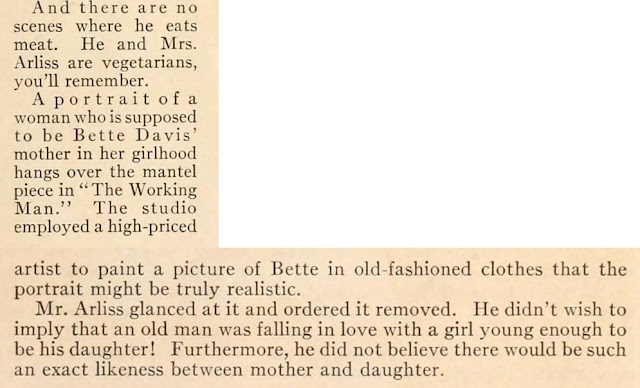
Bette's Hats & Reviews: The Working Man (1933)


Barely a year after George Arliss had requested Bette Davis for his film The Man Who Played God (1932), he "again materialized like a genie" to cast Davis as his spoiled daughter in The Working Man (1933). "It was the first important picture I had made in ages," Bette recalled in her autobiography, The Lonely Life (137). "Mr. Arliss directed me to advantage... He taught me always to think of what came before a scene and what was to come after. Scenes being shot out of sequence are the devil to play. 'Always keep the continuity in your head. It will help.' It did. One had to remember pitches of voice and mood to the fraction so that scenes when juxtaposed would blend. The Working Man was another big success and dignified my struggle [with the studio]."

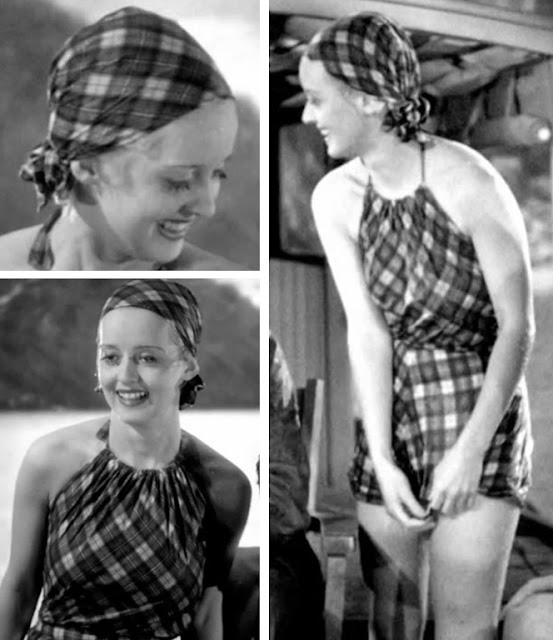
We meet Bette's character in a cute halter-neck plaid bathing suit, 
complete with matching head scarf.
Bette Davis, whose diction is music to the ears, does good work in the role of Jenny.
~ The New York Times

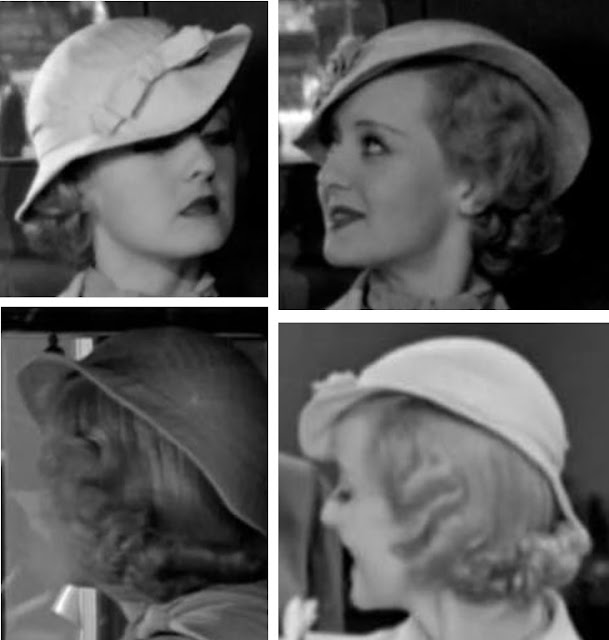
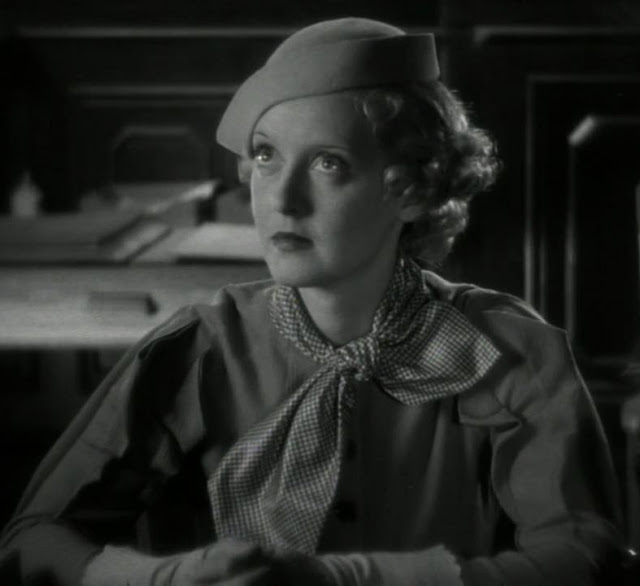
You can juuuust make out the stripes on this hat.
Bette Davis scores strong. There's delicious humor and the dialogue sparkles.

~ Film Daily 

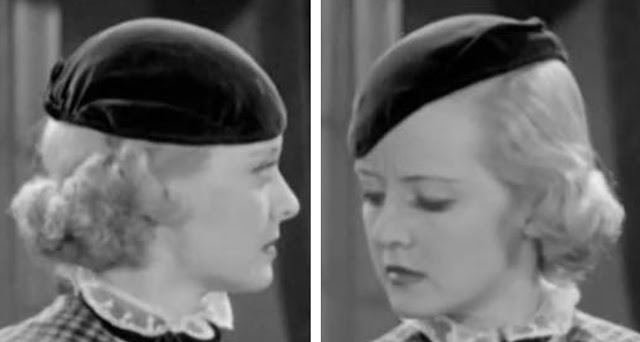
Velvet?

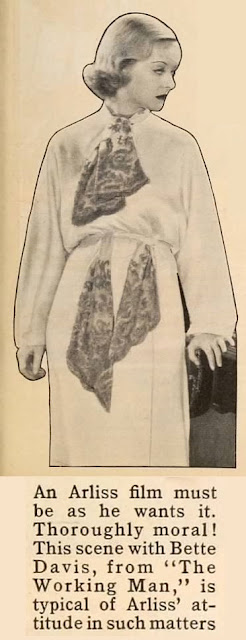
June 1933 also saw Bette Davis get her first Photoplay cover! An article about The Working Man appeared inside. I've included it below.


Click here to see the rest of Bette's costumes, including the nightgown, from The Working Man. According to the July 1933 New Movie Magazine, the diagonal striped Orry Kelly gown is gray and white chiffon.

Sources:

Davis, Bette. The Lonely Life: An Autobiography. G. P. Putnam's Sons, 1962.
Ringgold, Gene. Bette Davis: Her Films and Career. Citadel Press. 1966, 1985.

Saturday, February 12, 2022

Bette's Hats & Reviews: Parachute Man (1933)

Bette has a Southern accent in this movie... it's not good lol.

Bette's 14th movie, and first for 1933, was Parachute Man starring Douglas Fairbanks Jr. "I was again a secretary," she writes in her autobiography The Lonely Life, "but I was also the mistress of a racketeer. A typist moll. Warners were vaguely aware, evidently, of a possible niche for me. It took patience on my part" (135).


You can see the texture of the hat in this photo (suede?).
Bette Davis is attractive as Alabama, who speaks with a most decided Southern drawl.

~ The New York Times 

That entrance tho..


Bette Davis is cute, photographically and orally, with a Southern accent that gets across.

~ Weekly Variety 


Sources:

Davis, Bette. The Lonely Life: An Autobiography. G. P. Putnam's Sons, 1962.
Ringgold, Gene. Bette Davis: Her Films and Career. Citadel Press. 1966, 1985.

Saturday, January 29, 2022

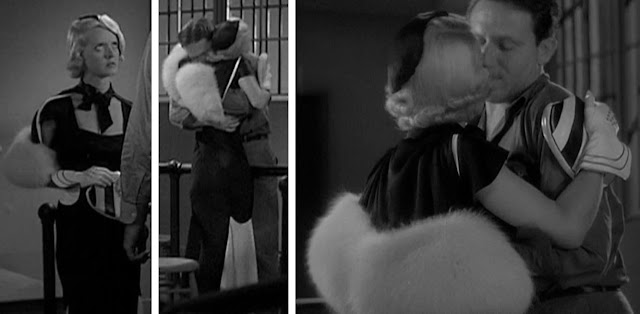
Bette's Hats & Reviews: 20,000 Years in Sing Sing (1932)

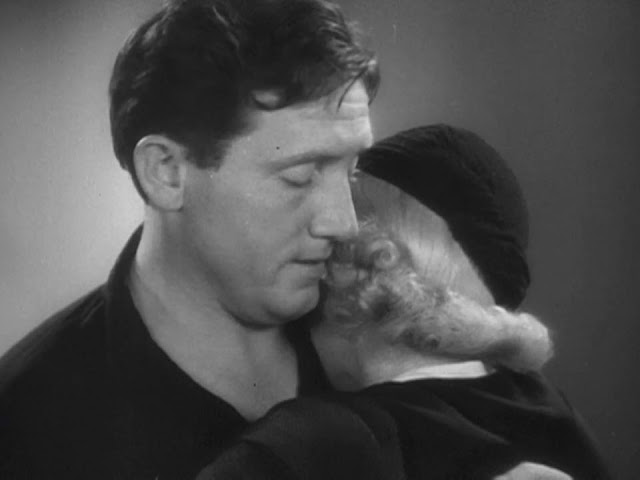
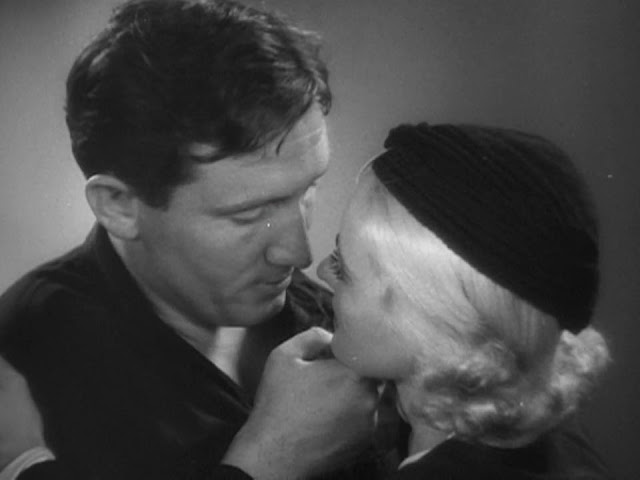
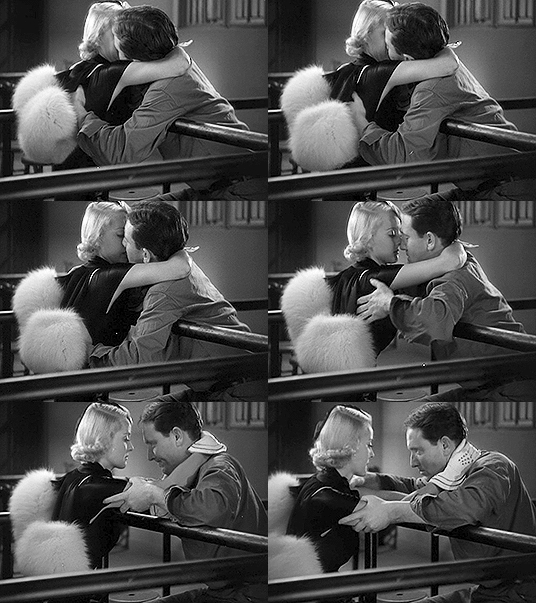
Isn't this a cute photo?

Bette's final film of 1932, 20,000 Years in Sing Sing, was released on Christmas Eve (If I hadn't of had a slightly different schedule last month, I could have posted this in the same day!). She was excited for the opportunity to work with Spencer Tracy: 

I was in seventh heaven. He was one of my few actor idols... I was good as the moll and my notices made that clear (The Lonely Life, 135).

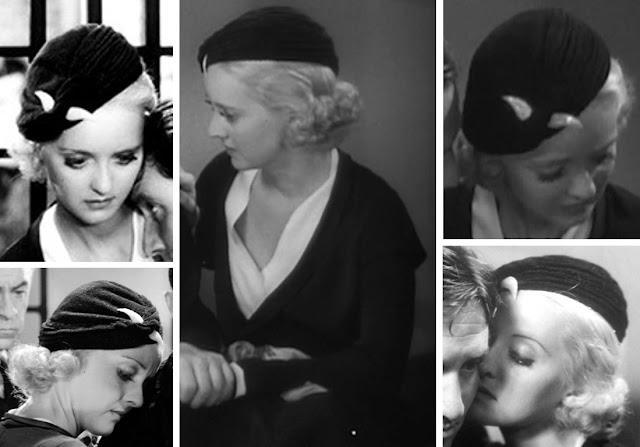
Probably one of the most hideous ensembles in the history of cinema. I don't even know what's going on here lol.

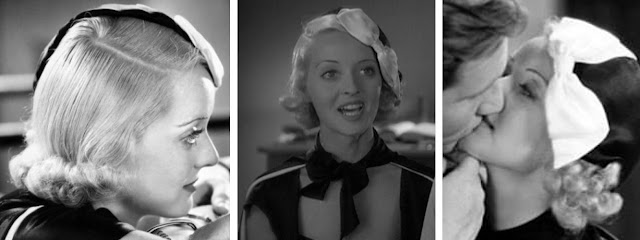
Also a very unusual hat, barely hanging on to one side of Bette's head and the other side obscured with a  huge bow.

Bette Davis does well as Fay.
~ The New York Times
Bette Davis is the convict’s moll who does him dirt in one breath and shoots to kill for him in another. She’s not particularly impressive here.
Bette Davis is touchingly wistful as his girl outside.
~ Larry Reid for Movie Classic Magazine, 1933


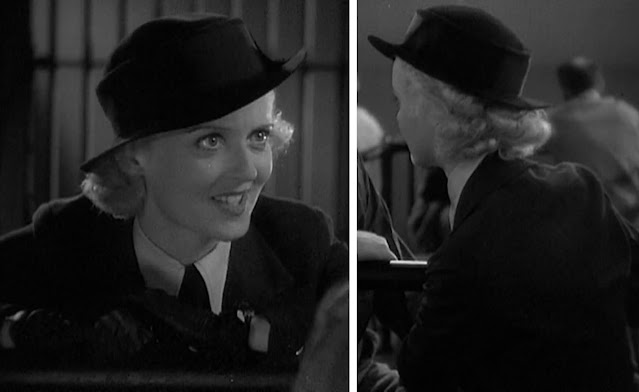
Two more looks at the texture of the hat.


Sources:

Davis, Bette. The Lonely Life: An Autobiography. G. P. Putnam's Sons, 1962.
Ringgold, Gene. Bette Davis: Her Films and Career. Citadel Press. 1966, 1985.